Tekla had a problem.
She loved parties, beautiful clothes and romantic adventures, but had little interest in the respectable life her parents expected of her. Eventually, her father lost patience and cursed her.
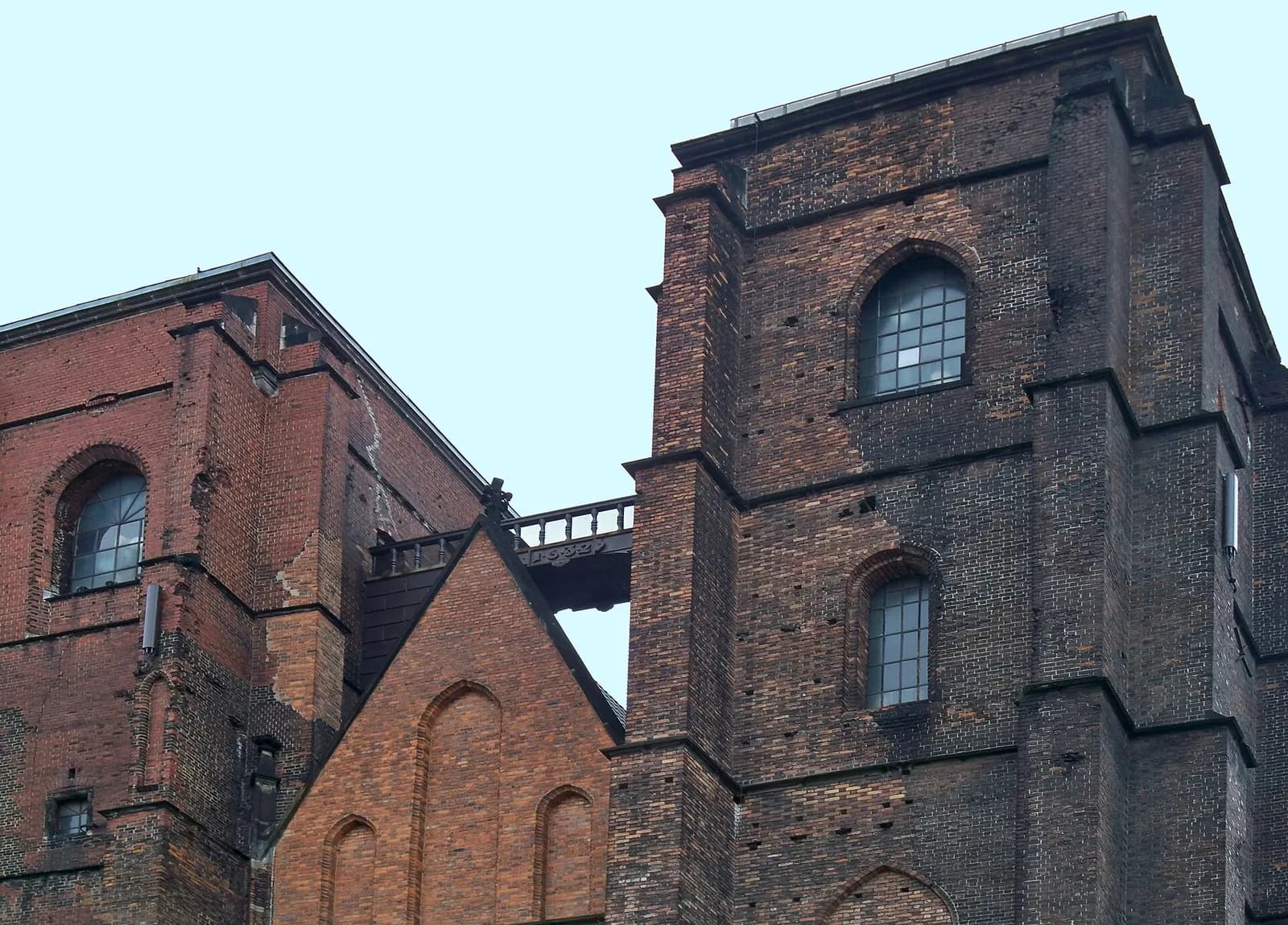
That night, supernatural forces carried Tekla to the bridge between the towers of St Mary Magdalene’s Church and condemned her to sweep it for eternity.
For years, she remained there, high above Wrocław.
Then a young witch called Martynka arrived.
Their story is one of the best-known legends attached to Mostek Pokutnic, the Penitents’ Bridge, better known as Mostek Czarownic, the Witches’ Bridge.
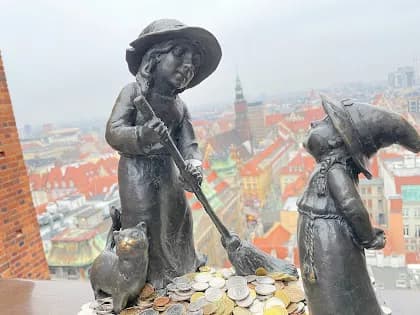
Today, you can climb the same 247 steps, cross the narrow walkway and find bronze figures of Tekla and Martynka waiting above the city.
A bridge between two medieval towers
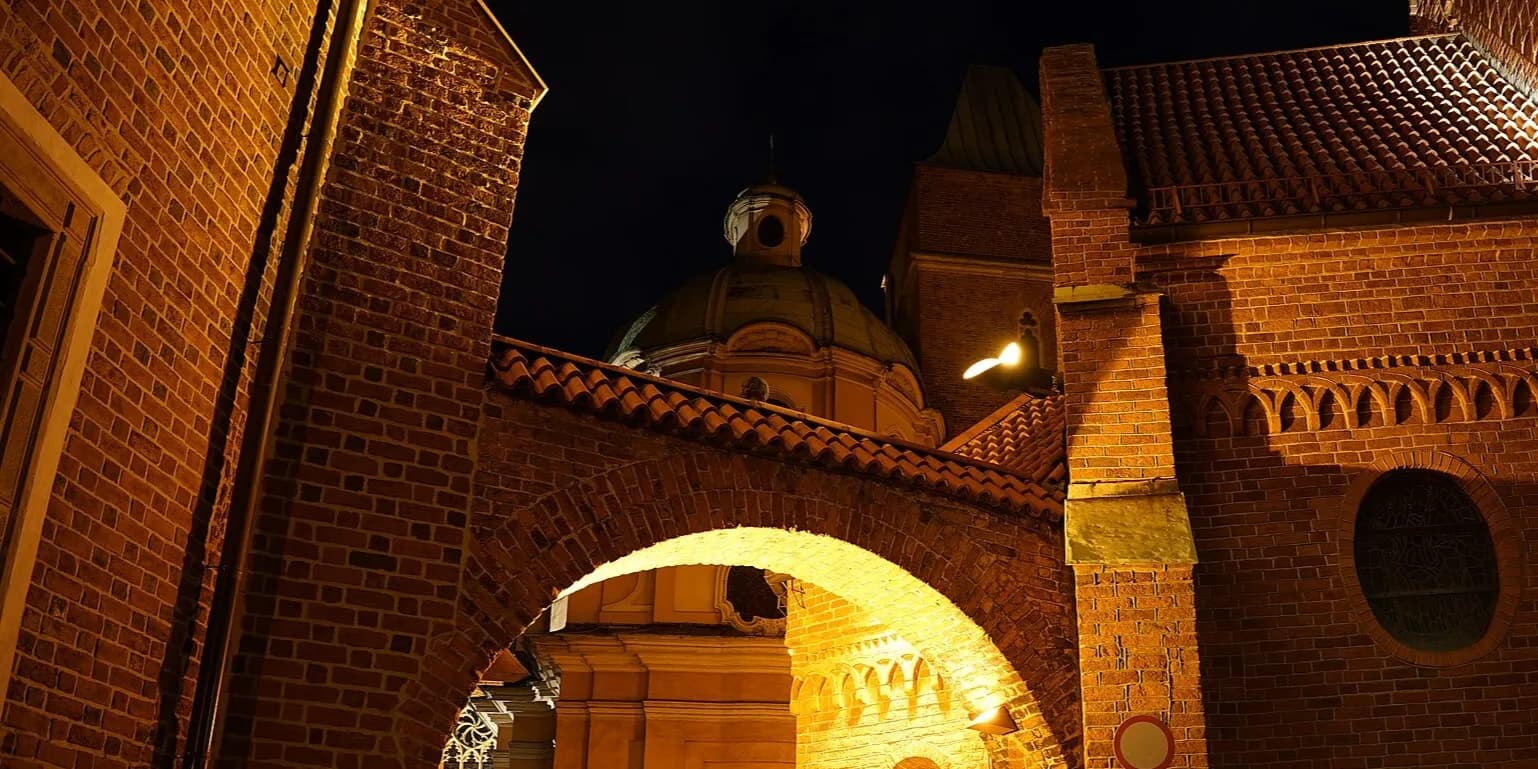
The Witches’ Bridge connects the two towers of St Mary Magdalene’s Church, one of Wrocław’s oldest Gothic churches.
A walkway connecting the towers is documented as far back as 1459. The church and its towers have endured several major events over the centuries, including a serious fire in 1887 and the destruction of the southern tower in 1945 following an explosion involving stored ammunition.
The bridge seen today is the result of reconstruction carried out around the turn of the 20th and 21st centuries.
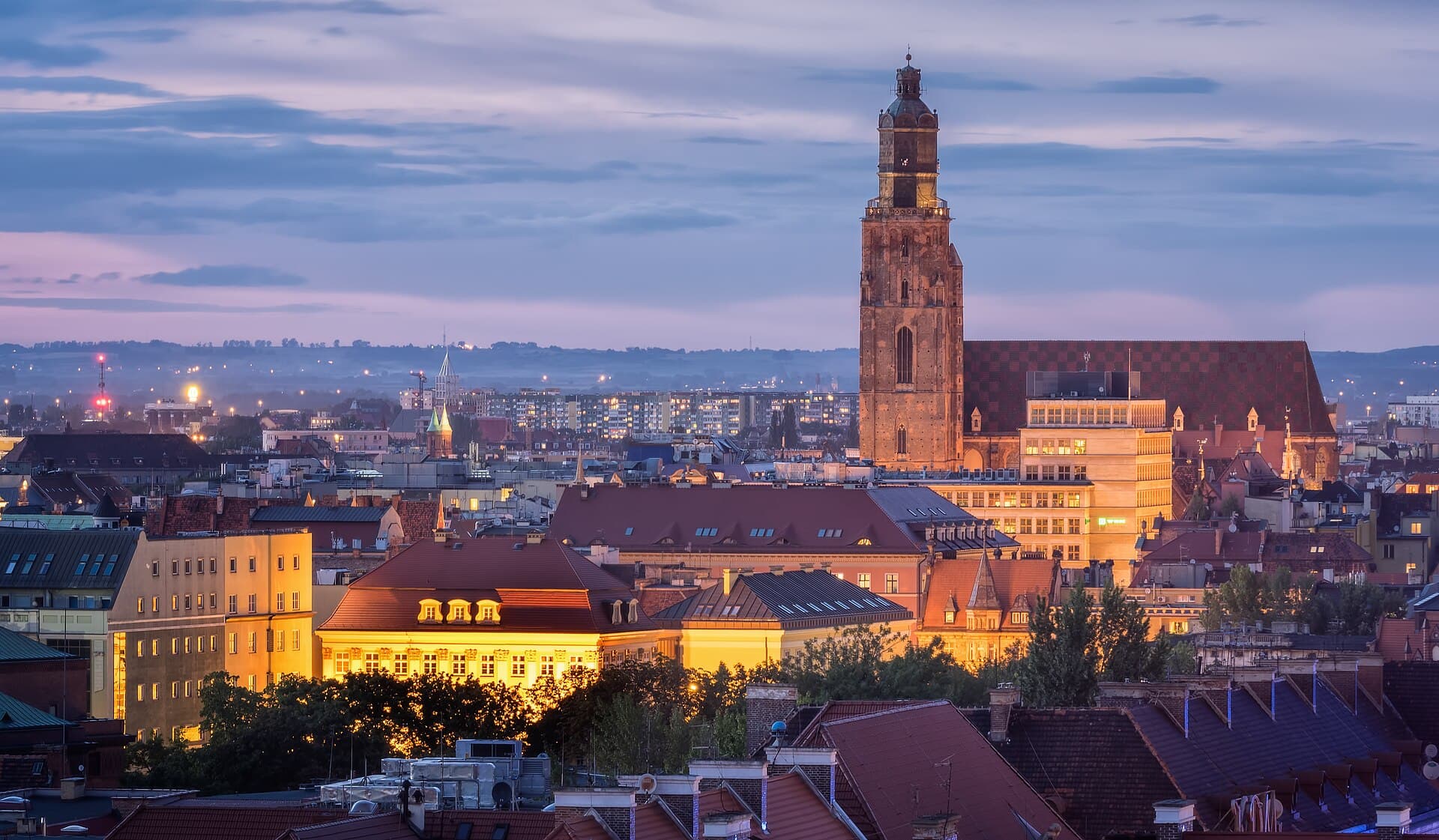
It sits around 45 metres above street level, with views across the Old Town towards the Market Square, the Town Hall, St Elizabeth’s Church and, further away, Ostrów Tumski.
There are 247 steps between street level and the bridge.
And that is where Tekla’s story begins.
Tekla’s punishment
According to the legend, Tekla’s carefree lifestyle had become too much for her parents.
She liked parties, dressing up and romantic adventures, but had little interest in marriage and domestic responsibilities. Her father eventually cursed her, and supernatural forces carried her to the bridge.
Her punishment was simple: sweep the bridge.
Day after day, she was forced to carry out the same task, unable to leave.
The story is a moral tale reflecting the expectations placed on women at the time. Tekla’s refusal to conform is presented as the reason for her punishment.
But the curse was eventually broken.
Martynka comes to the rescue
Tekla was joined by Martynka, a young witch who took pity on her.
Martynka went looking for someone who could help and eventually found a wizard named Michał.
According to the legend, Michał agreed to intervene after Martynka had assisted him. With his help, Tekla was freed from her punishment and returned to her parents.
Martynka went back to the school of witches.
The two have since become the bridge’s most recognisable characters, immortalised in bronze on the walkway.
Two little witches above the Old Town
The bronze figures of Tekla and Martynka are part of Wrocław’s famous tradition of miniature dwarf sculptures.
They were inspired by Mariusz Urbanek’s fairy tale Mostek Czarownic and became part of the bridge’s modern story following a project developed in 2018.
The sculptures have given the old legend a new form. Tekla and Martynka can now be found by visitors following Wrocław’s dwarf trail, alongside the historic architecture and city views.
It is a fitting place for them. Their story belongs to the bridge, and the bridge has become one of the city's most recognisable viewpoints.
The women who danced at night
There is another legend attached to the Witches’ Bridge.
According to one version, the spirits of young women who had avoided marriage, housework and family life were seen dancing on the bridge at night.
Their punishment was to sweep it for eternity.
Like the story of Tekla, this is folklore rather than documented history. The tale reflects an older idea of respectable womanhood, in which marriage and domestic duties were expected to take priority.
Were witches really tested here?
The bridge has also acquired a darker story connected with witch hunts.
One legend claims that women accused of witchcraft were forced to cross the narrow walkway. Those who reached the other side were supposedly considered guilty because they must have been helped by supernatural powers. Those who fell were considered innocent.
There is no established historical evidence that such a test actually took place on the bridge.
It remains part of the folklore surrounding Mostek Czarownic, rather than an established event in Wrocław’s history.
From curse to bronze
The Witches’ Bridge carries two very different histories.
There is the documented story of the Gothic church, the walkway recorded in the 15th century, wartime destruction and later reconstruction.
Then there is Tekla, condemned to sweep the bridge; Martynka, who helped to free her; the women said to dance there after dark; and the alleged witch test that belongs to local folklore.
The bronze figures of Tekla and Martynka are perhaps the clearest meeting point between those two worlds.
An old tale of punishment has become part of the modern city, tucked among Wrocław’s famous dwarfs and waiting for anyone who makes the climb.
Just remember their names when you reach the top.
Tekla and Martynka are still up there.
See more: One Dumpling Too Many: The Legend of Kluskowa Brama in Wrocław
Image credit: Panek, Wikimedia Commons, CC BY-SA 3.0 / Dogiba, Wikimedia Commons, CC BY-SA 4.0