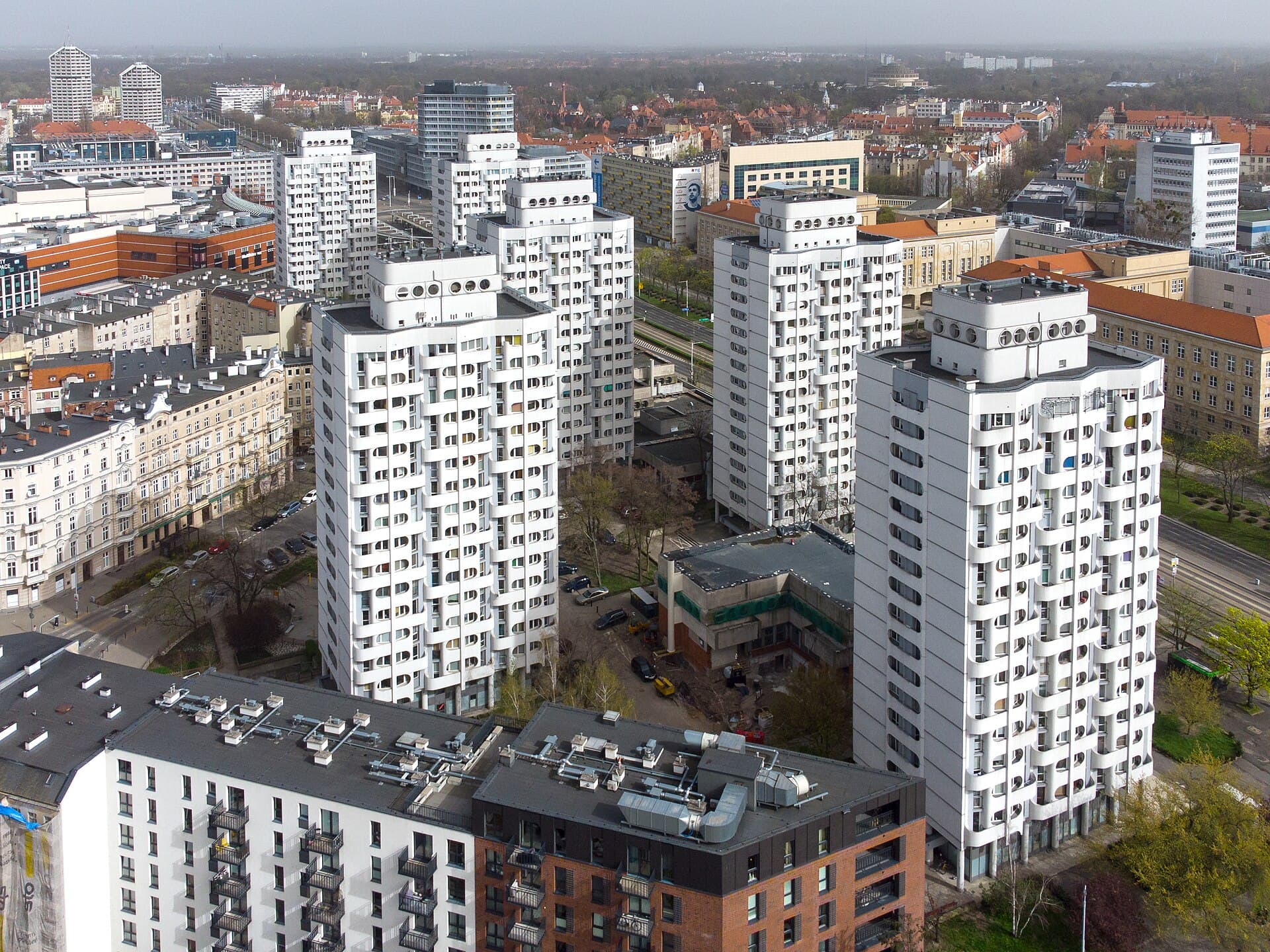
Few buildings in Wrocław divide opinion quite like the Sedesowce. Instantly recognisable thanks to their curved balconies and distinctive concrete façades, these six residential towers have become one of the city’s most photographed landmarks. While some see them as a reminder of Poland’s communist past, others regard them as one of the country’s finest examples of post-war modernist architecture.
Known officially as the Manhattan Estate, the complex has evolved from a controversial housing project into a celebrated part of Wrocław’s architectural identity.
Why Are They Called the Sedesowce?
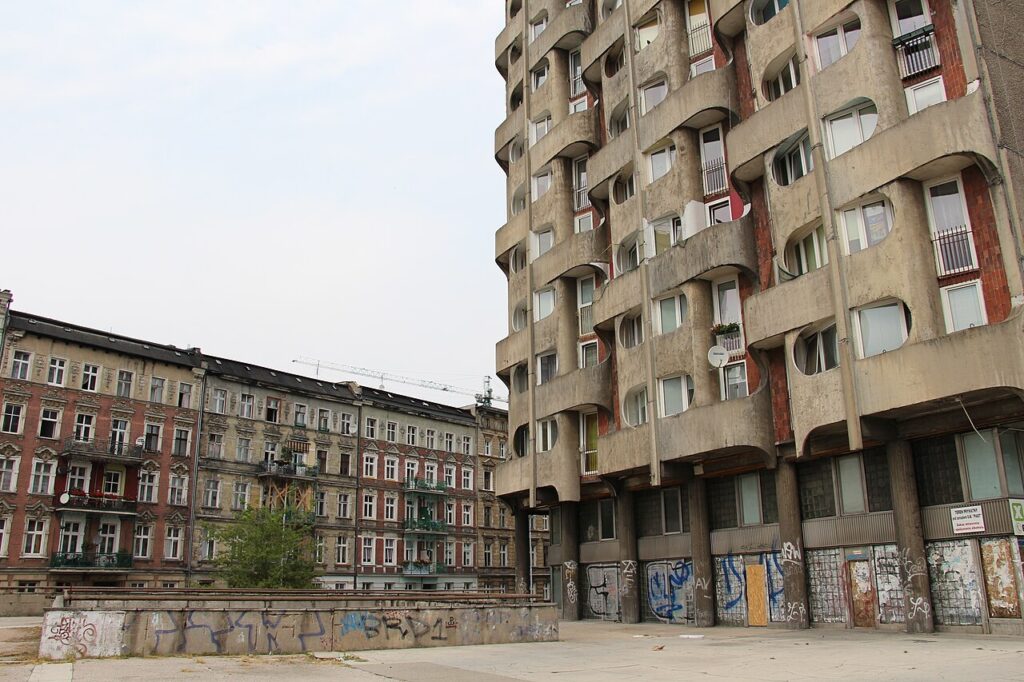
The unusual nickname comes from the shape of the buildings’ balconies and windows, which many locals thought resembled toilet seats. The Polish word sedes was once commonly used to describe a toilet seat, and the name quickly caught on.
Although the official name is the Manhattan Estate, many Wrocław residents still refer to the buildings simply as the Sedesowce. Today, both names are widely recognised and reflect different aspects of the complex’s history.
The Origins of Wrocław’s Manhattan
The estate was designed by renowned architect Jadwiga Grabowska-Hawrylak, one of Poland’s pioneering female architects. Her vision emerged during the late 1960s as part of the redevelopment of the heavily damaged Plac Grunwaldzki district.
Designed between 1967 and 1970 and constructed throughout the early 1970s, the project aimed to create far more than a collection of apartment blocks. It was planned as a modern urban neighbourhood, combining homes, shops and public spaces within a single development.
Alongside the six residential towers, the original plans included commercial pavilions and communal facilities intended to create a lively, self-contained community.
Why ‘Polish Manhattan’?
The comparison with New York was never intended to suggest that Wrocław had its own skyscraper district. Instead, the nickname reflected the dramatic skyline created by the six towers. At a time when high-rise residential developments were still relatively uncommon in Poland, the estate stood out as a bold symbol of modern city living.
Viewed from across the city, the cluster of tall buildings reminded many residents of Manhattan’s famous skyline, giving rise to a nickname that has remained for decades.
An Icon of Polish Modernism
The Manhattan Estate is now widely regarded as one of Poland’s most important examples of Brutalist and late modernist architecture.
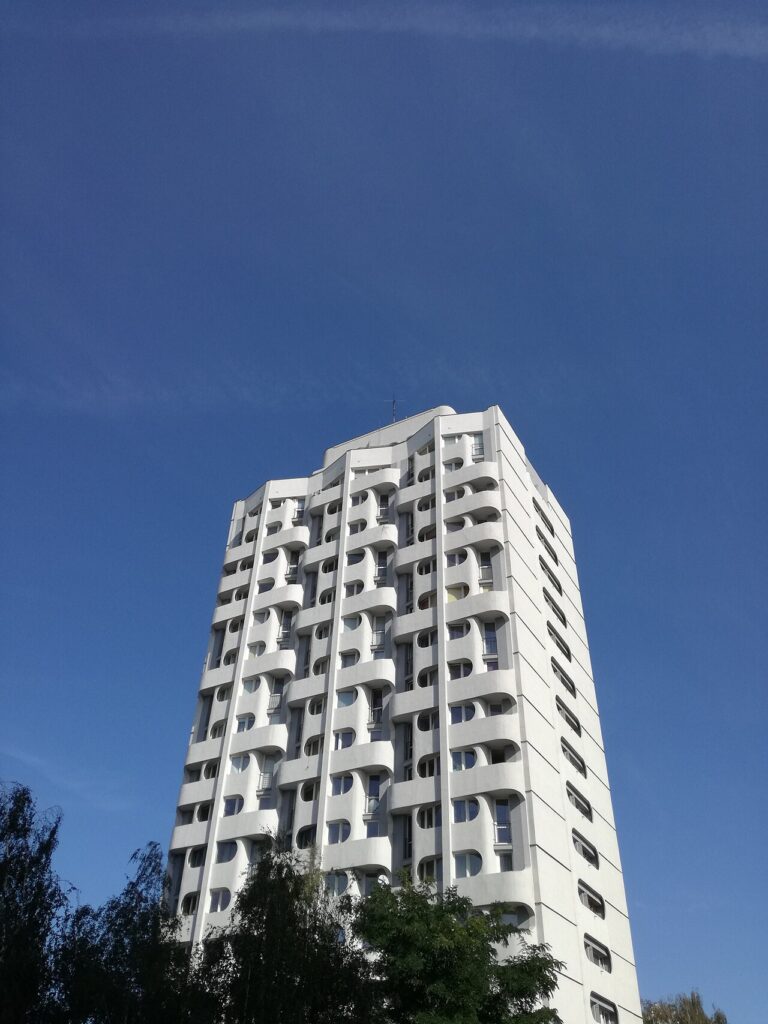
Its sweeping curved forms, exposed concrete and bold geometric design were unlike anything else being built in the country at the time. Rather than treating housing as rows of identical apartment blocks, the architect created sculptural buildings that still stand apart from much of Wrocław’s skyline.
Architectural historians now frequently cite the development as one of the defining achievements of post-war Polish design.
Changing Opinions
For many years, public opinion on the buildings remained divided.
The ageing concrete façades became stained by pollution and weather, reinforcing the estate’s rather unflattering nickname. Yet behind the striking exterior, residents often praised the spacious apartments, generous natural light and excellent location beside Plac Grunwaldzki.
Extensive renovation work carried out during the 2010s transformed the appearance of the complex. The cleaned façades and restored concrete helped reveal the original architectural vision, leading many people to view the estate in a new light.
Today, the towers attract photographers, architecture enthusiasts and visitors from around the world who are increasingly interested in Poland’s post-war modernist heritage.
A Landmark That Continues to Define the Skyline
Standing close to the Grunwaldzki Bridge, the Oder River and several university campuses, the Sedesowce remain one of the most recognisable features of Wrocław’s skyline.
They are no longer simply flat blocks or a curiosity with an unusual nickname. Instead, they have become a lasting symbol of a city that has continually reinvented itself, preserving remarkable examples of architecture from every period of its history.
Whether admired as a masterpiece of Brutalism or simply recognised as one of Wrocław’s most distinctive landmarks, the Sedesowce continue to spark conversation more than fifty years after they first appeared on the city’s skyline.
More hidden gems in Wrocław to explore here!