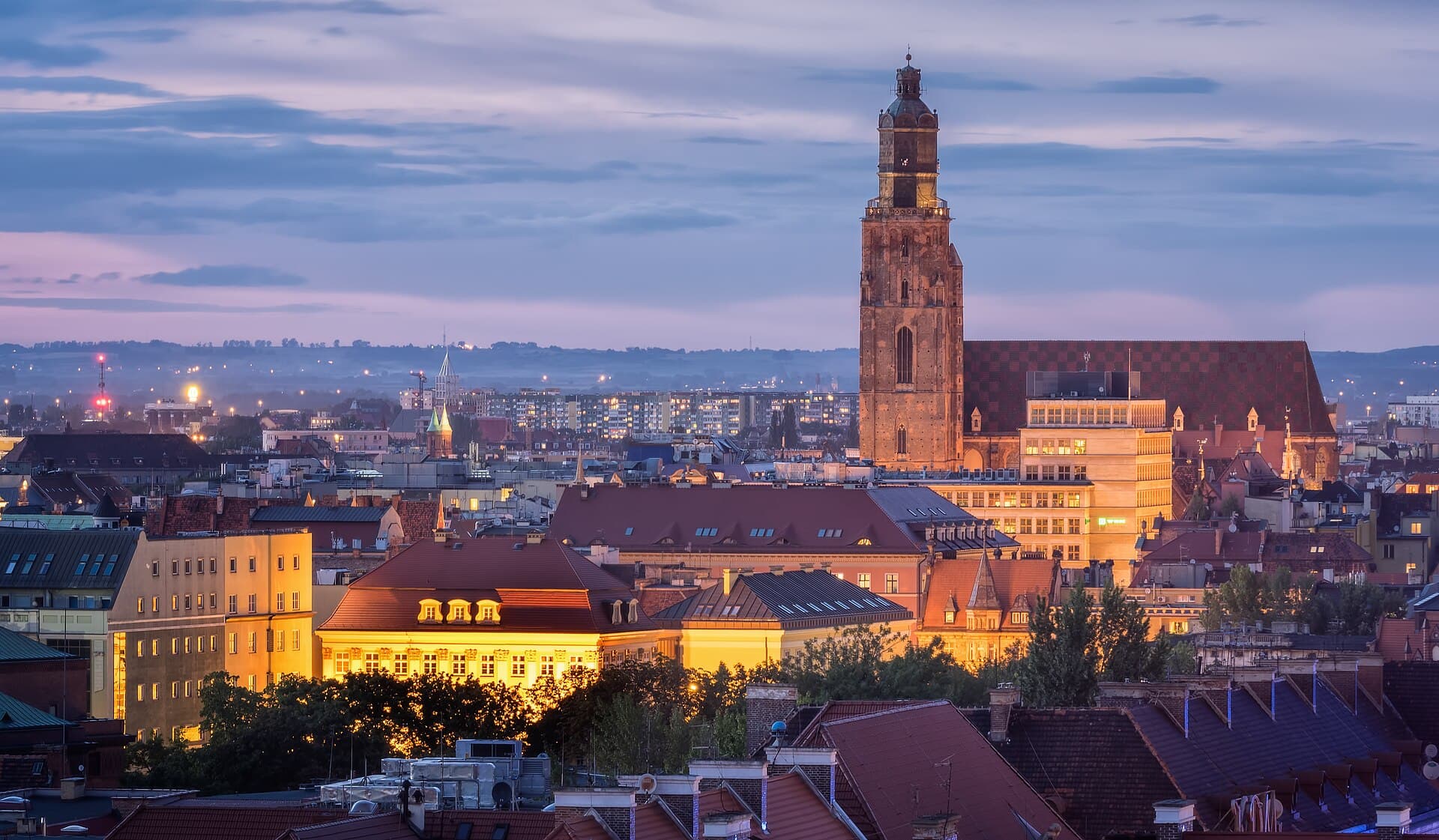
Anyone who has spent time exploring Wrocław’s Market Square will have looked up at the soaring tower of St. Elizabeth’s Basilica. Rising above the colourful façades of the Rynek, the church has been one of the city’s defining landmarks for more than seven centuries. From busy café terraces below to panoramic views across the Old Town, its unmistakable silhouette is woven into everyday life in Wrocław.
While the surrounding square has evolved through changing rulers, wars and generations of residents, the basilica has remained a constant presence. Today it is one of the city’s most important historic churches, admired for its remarkable Gothic architecture, fascinating history and much-loved programme of free summer organ recitals.
At the Heart of Medieval Wrocław
The story of St. Elizabeth’s Basilica begins in the early 13th century, when the first church was built on this site. Originally dedicated to St. Lawrence, it was rededicated to St. Elizabeth of Hungary in 1257. As Wrocław grew into one of the most prosperous trading cities in Central Europe, the modest church gradually gave way to the magnificent brick Gothic basilica seen today.
Construction began during the early 14th century, with wealthy merchants and local guilds contributing to its expansion. Their investment reflected both the city’s growing prosperity and the important role the church played in civic life. By the late Middle Ages, St. Elizabeth’s had become one of Wrocław’s principal parish churches, serving generations of residents living within the city walls.
A Church Shaped by Centuries of Change
Like Wrocław itself, the basilica has witnessed dramatic political and religious change.
During the Reformation, in 1525, it became one of the first Lutheran churches in Silesia and remained the city’s leading Protestant church for more than 400 years, when Wrocław was known as Breslau.
Following the Second World War, the city became part of Poland, and the church resumed Catholic worship in 1946. Today it serves as Wrocław’s military garrison church while remaining one of the city’s most visited historic attractions.
Its walls tell the story of a city whose identity has continually evolved over the centuries.
A Masterpiece of Silesian Gothic Architecture
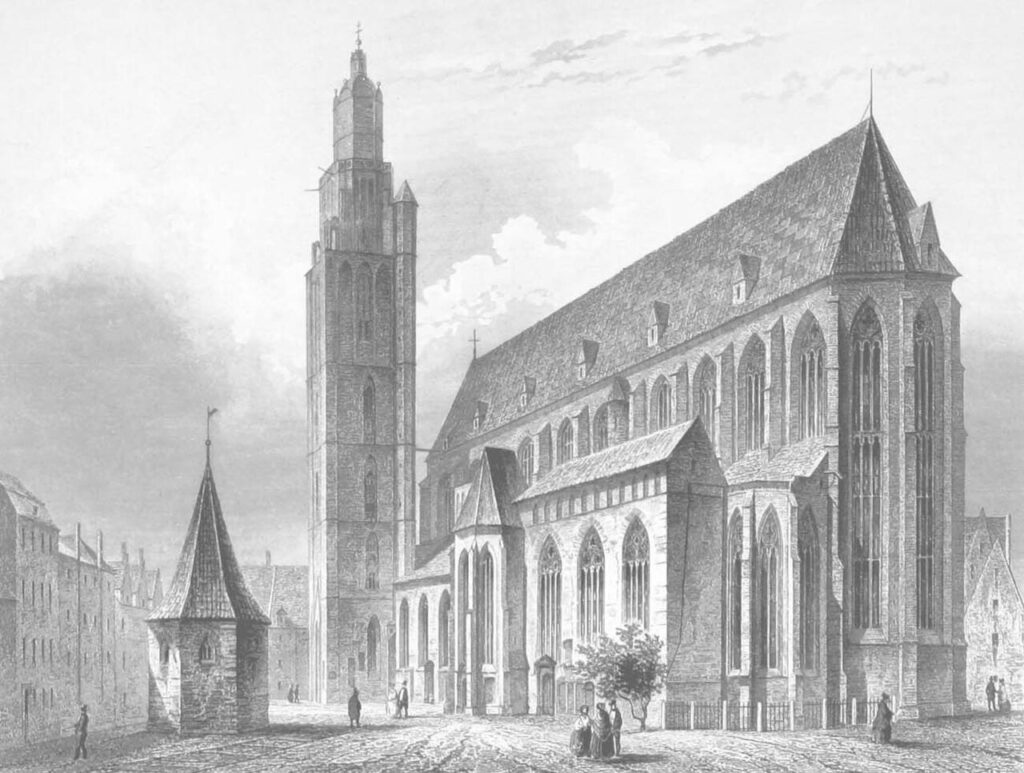
Built almost entirely from brick, St. Elizabeth’s Basilica is widely regarded as one of the finest examples of Silesian Gothic architecture. Inside, visitors are greeted by soaring vaulted ceilings, elegant stone columns and a series of chapels that reveal how generations of local families and guilds left their mark on the building.
The tower reaches approximately 91.5 metres above the Market Square and remains one of the tallest historic structures in Wrocław. Few people realise that it was once even higher. The original Gothic spire is believed to have reached around 130 metres before collapsing during a violent storm in 1529. The rebuilt tower, though lower than its predecessor, has continued to define the city’s skyline ever since.
Fire, Restoration and Renewal
The basilica has survived repeated storms, lightning strikes and structural failures throughout its long history, but one of the greatest disasters it faced was in 1976 when a devastating fire swept through the church.
The blaze destroyed the historic organ and caused extensive damage to the interior. Restoration continued for decades, with conservators carefully preserving the Gothic character of the building while repairing centuries of wear and damage. Thanks to this work, visitors today can appreciate one of Wrocław’s finest historic interiors as much as previous generations once did.
Free Summer Organ Recitals
During the summer months, St. Elizabeth’s Basilica becomes one of Wrocław’s most atmospheric concert venues. A series of free organ recitals fills the vast Gothic interior with music, drawing both residents and visitors into the church.
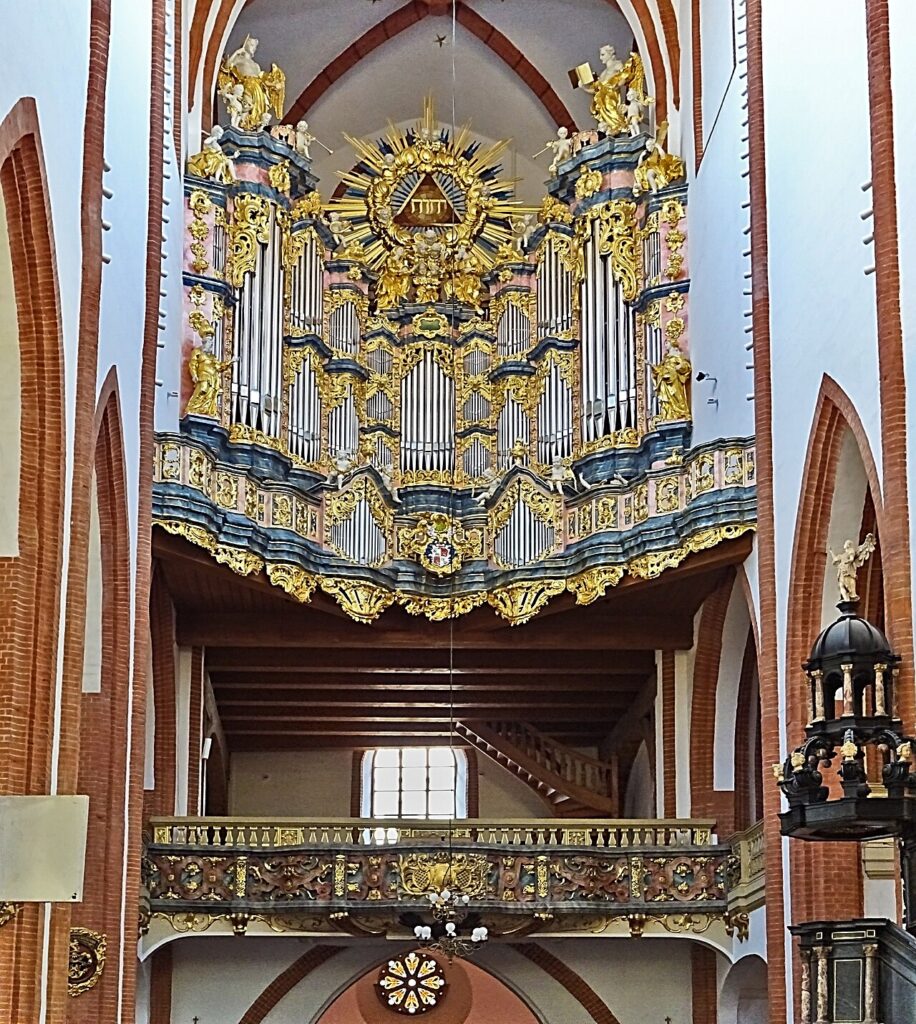
For many people exploring the Old Town, discovering a recital in progress is a delightful surprise. Sitting beneath centuries-old vaulted ceilings while the sound of the organ echoes through the basilica offers a memorable way to experience one of Wrocław’s most remarkable historic buildings.
A Landmark That Continues to Shape the City
Whether viewed from the bustling Rynek, photographed from nearby streets or spotted on the skyline from one of Wrocław’s bridges, St. Elizabeth’s Basilica remains one of the city’s defining landmarks.
Its history mirrors that of Wrocław itself, reflecting centuries of prosperity, faith, conflict and renewal. While countless visitors arrive to admire its Gothic architecture, the basilica continues to play an active role in city life through worship, cultural events and the annual programme of free organ concerts that brings new audiences through its doors every summer.
Experience magical medieval music recitals at Wrocław’s historical sites