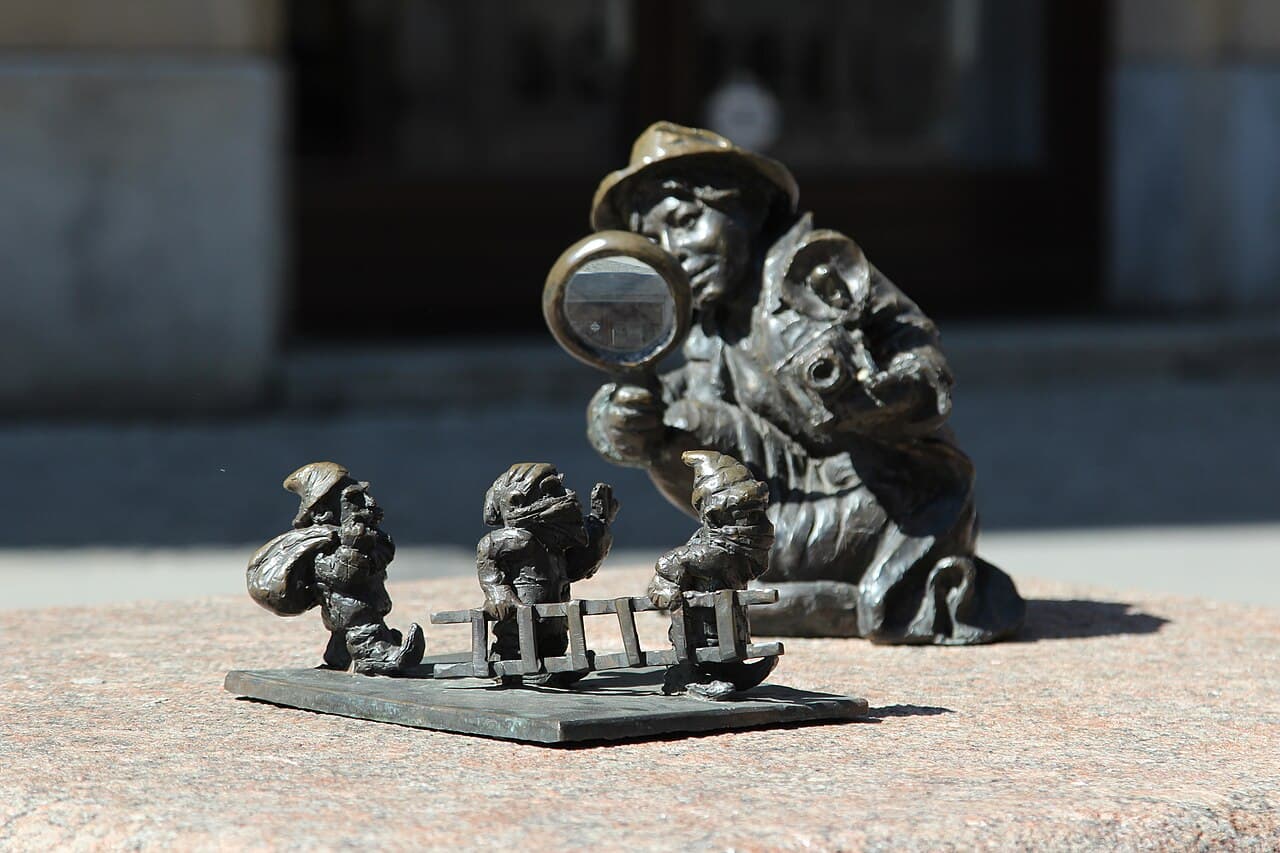
Visitors arriving in Wrocław for the first time are often surprised to find themselves looking down rather than up. Scattered across pavements, perched on windowsills and tucked beside doorways are hundreds of tiny bronze figures, each with its own name, personality and story.
Known locally as the Krasnale Wrocławskie, or Wrocław Dwarfs, these miniature sculptures have become one of the city’s defining attractions. What began as a symbol of peaceful resistance during the final years of communist rule has evolved into a much-loved tradition that attracts visitors from around the world.
Today, searching for the dwarfs is one of the most enjoyable ways to discover Wrocław. Yet behind their playful appearance lies a remarkable story of creativity, resilience and civic pride.
A Symbol Born from Protest
The origins of the Wrocław Dwarfs date back to the early 1980s, when Poland was experiencing political unrest under communist rule.
During this period, an underground protest movement known as the Orange Alternative adopted the image of a cheerful dwarf as its symbol. The movement became famous for using humour and absurdity to challenge censorship and authoritarianism without resorting to violence.
Whenever authorities painted over anti-government graffiti, activists responded by painting small orange-capped dwarfs on the freshly covered walls. These whimsical images transformed blank spaces into quiet acts of resistance, demonstrating that satire could be just as powerful as direct political slogans.
The dwarf soon became an unmistakable emblem of peaceful protest and freedom of expression, recognised throughout Wrocław and beyond.
The Famous Dwarfs’ March
One of the movement’s best-known demonstrations took place on the 1st of June 1988.
Thousands of people gathered in Wrocław wearing orange hats and dwarf costumes, taking part in what became known as the Dwarfs’ March. The event used humour to expose the absurdity of suppressing peaceful demonstrations, making it difficult for the authorities to respond without attracting further criticism.
Although light-hearted on the surface, the march became one of the defining moments in the city’s modern history and remains an important reminder of Wrocław’s spirit of peaceful civic engagement.
From Street Symbol to Bronze Landmark
The transition from political symbol to permanent public artwork began in 2001 with the unveiling of Papa Krasnal, or Father Dwarf.
Located on Świdnicka Street, the larger bronze monument commemorates the Orange Alternative movement and serves as the symbolic ancestor of the many smaller dwarfs found throughout the city today.
The modern dwarf trail began four years later.
In August 2005, local sculptor Tomasz Moczek created the first series of miniature bronze dwarfs, including the Fencer, the Butcher, the Odra Washerman and the two Little Sisyphuses.
These original figures proved enormously popular with residents and visitors alike. Their success inspired businesses, charities, universities, cultural institutions and public organisations to commission additional dwarfs, each reflecting the character of its surroundings.
More Than 800 Stories Waiting to Be Found
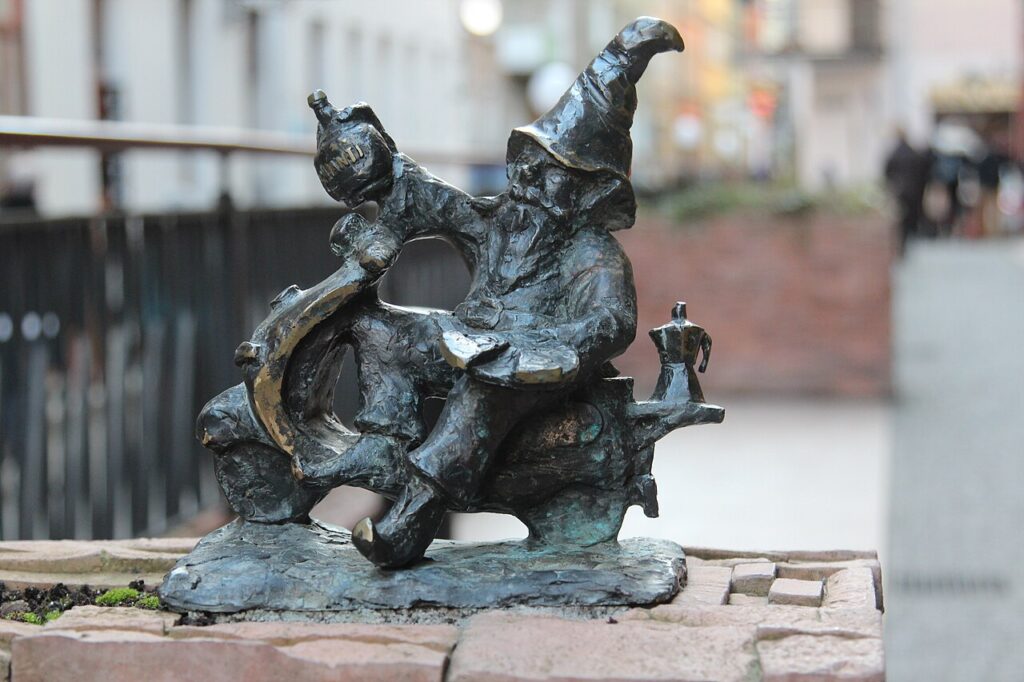
One of the reasons the Wrocław Dwarfs remain so engaging is that no two are exactly alike.
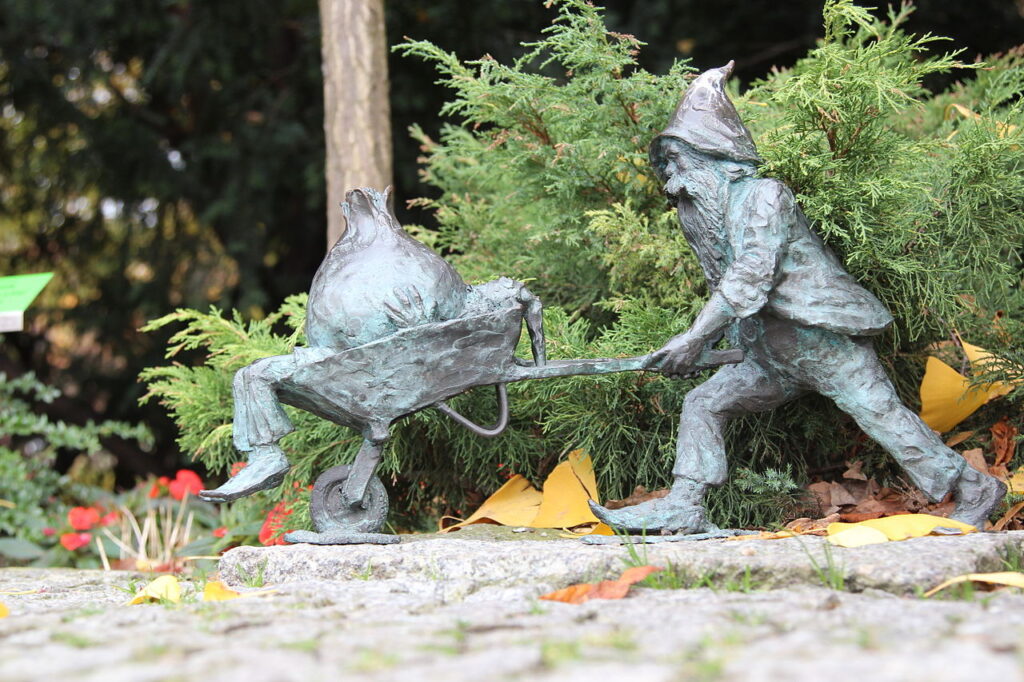
Each bronze figure has its own distinctive appearance, profession or role. Some represent firefighters, musicians, doctors or students, while others celebrate scientists, cyclists, hotel staff, artists and local charities.
Many have been commissioned by organisations that wish to contribute to the city’s unique public art collection, creating a trail that continues to expand year after year.
The exact number of dwarfs changes regularly as new additions appear across the city. Today, there are well over 800 bronze figures, making them one of the largest public art projects of their kind in Europe.
A Treasure Hunt Across the City
For many visitors, finding the dwarfs quickly becomes more than sightseeing. It is a city-wide treasure hunt that encourages people to explore streets and neighbourhoods they might otherwise overlook.
Although many of the most famous figures can be found around the historic Market Square, others are hidden throughout Wrocław. Some sit quietly beside bridges, while others peek from shop entrances, public buildings or parks.
Maps, guidebooks and mobile apps help visitors track their discoveries, while guided walking tours reveal the stories behind some of the city’s most popular characters.
Children enjoy spotting the tiny sculptures at street level, while adults often discover that each dwarf offers a glimpse into Wrocław’s history, institutions or community life.
A Reflection of Wrocław’s Character
The enduring popularity of the dwarfs is about much more than tourism.
They reflect the city’s ability to transform a difficult chapter of its history into something welcoming, creative and inclusive. Rather than allowing the symbolism of the Orange Alternative to fade, Wrocław embraced it and reimagined it for future generations.
The result is a public art collection that continues to grow organically alongside the city itself.
New dwarfs frequently commemorate anniversaries, celebrate community organisations or highlight charitable causes, ensuring the tradition remains relevant rather than simply becoming a historical curiosity.
Planning Your Own Dwarf Hunt
If you are visiting Wrocław, allow plenty of time to explore on foot.
Many of the best-known dwarfs are concentrated around the Market Square (Rynek) and nearby streets, making this the ideal place to begin. However, some of the most rewarding discoveries are found away from the busiest tourist routes.
Keep an eye on building corners, windowsills and the edges of pavements. Most of the bronze figures stand only around 20 to 30 centimetres tall, making them easy to miss if you are not paying attention.
A camera is highly recommended, as every dwarf has its own personality and offers a memorable photo opportunity.
A Lasting Symbol of the City
Few attractions capture the identity of a city as successfully as the Wrocław Dwarfs.
Their story begins with humour used as a form of peaceful resistance and continues today as one of Poland’s most distinctive visitor experiences. Whether you are interested in history, public art or simply exploring Wrocław from a different perspective, the city’s tiny bronze residents offer a unique way to connect with its past and present.
What started as a satirical response to censorship has become a symbol of creativity, resilience and community spirit. For visitors and residents alike, the Wrocław Dwarfs remain a reminder that even the smallest figures can leave a lasting impression.
Click here to find more things to do in Wrocław!