Looking to explore Wrocław in a new way? Whether you’re a history enthusiast, a nature lover, or just enjoy a good walk, these three walking trails in Wrocław will guide you through its most scenic and interesting spots. Each route offers a different lens into the heart of the city! If you’re ready for an adventure on foot, here are three walking trails, complete with stop-by-stop instructions, distances, durations, and themes.
Jarnołtów–Ratyń Nature Trail: Wrocław’s Green Escape
- Theme: Eco-tourism, nature, biodiversity
- Distance: 6.5 km
- Time: ~2–2.5 hours
- Stops: 14
- Start/End Point: Karczma Rzym, Jarnołtów (bus 609 from Dworzec Świebodzki)
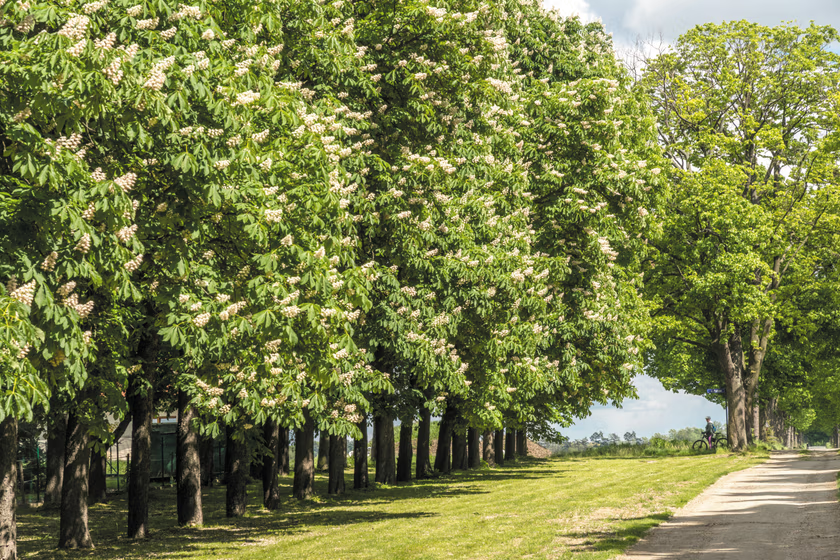
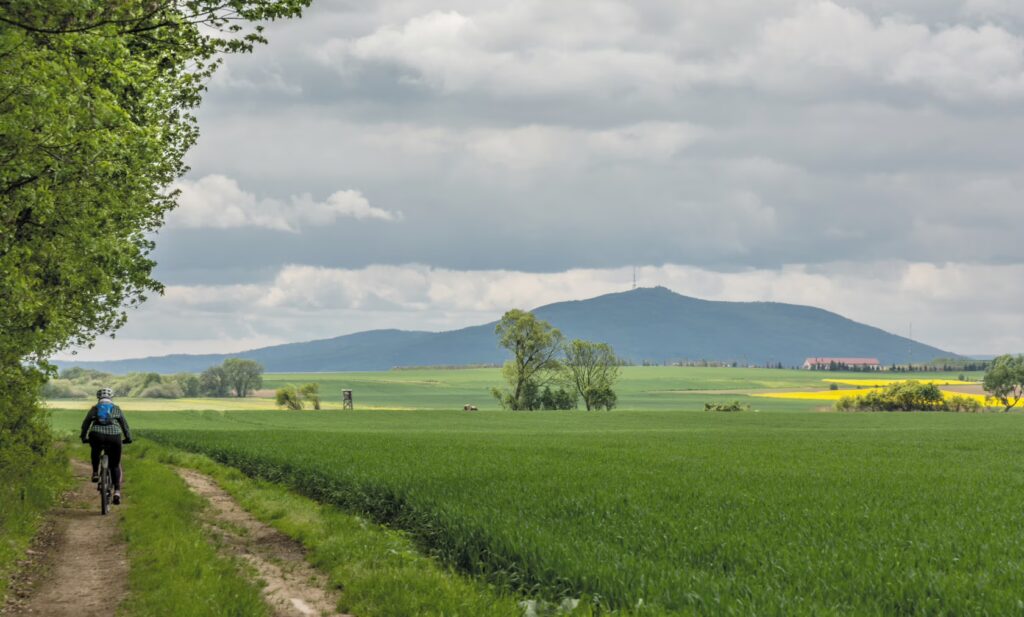
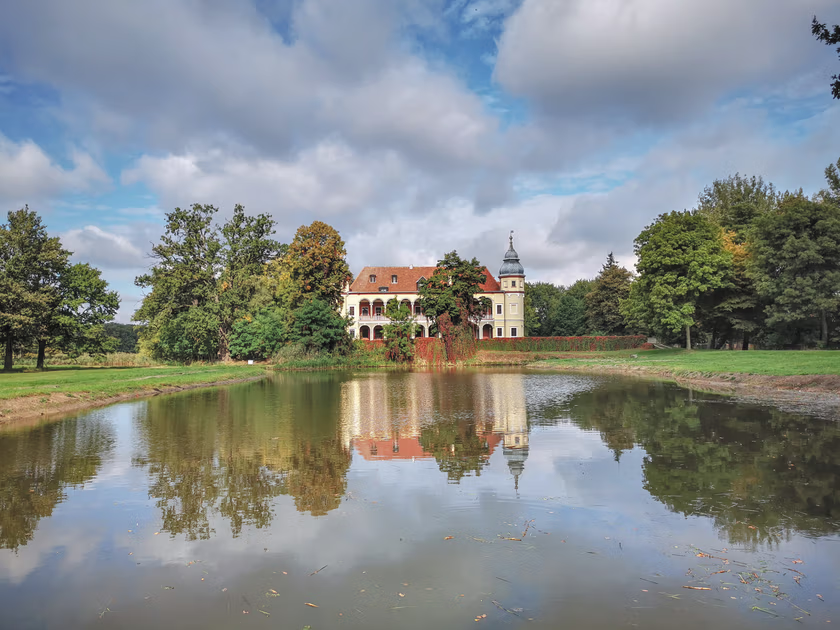
This looped route is part of the “Dolina Bystrzycy” Landscape Park and offers a complete escape from the city without ever leaving Wrocław. As one of the most peaceful and nature-filled walking trails in Wrocław, it runs through lush meadows, floodplain forests, and the meandering banks of the Bystrzyca River. Along the route, 14 marked stops with educational signage introduce walkers to local ecosystems, flora, and fauna.
Click here for our guide to the best parks in Wrocław!Trail Description & Stops:
- Karczma Rzym (Start)
- Meadows and river valley view
- Floodplain forest of elm and ash
- Birdwatching site
- Oxbow lake lookout
- Historic trees
- Willow-poplar riparian forest
- Educational stop: hydrology of the Bystrzyca
- Marshland flora station
- Elevated observation point
- Ash-alder forest ecosystem
- Wildflower meadow ecosystem
- Agricultural landscape history
- Return to Karczma Rzym (End)
Tip: You can shorten the trail by ending in Ratyń and taking bus 117 or 617 back to Leśnica or Jerzmanów. The whole trail is bike-friendly and mostly follows unpaved dirt paths, forest tracks, and narrow asphalt roads.
Bridges and Crossings Trail: Walk Across Wrocław’s Waterways
- Theme: Architecture, history, engineering
- Distance: 7.16 km
- Time: ~3.5 hours
- Stops: 19
- Start Point: Mosty Mieszczańskie
- End Point: Most Szczytnicki
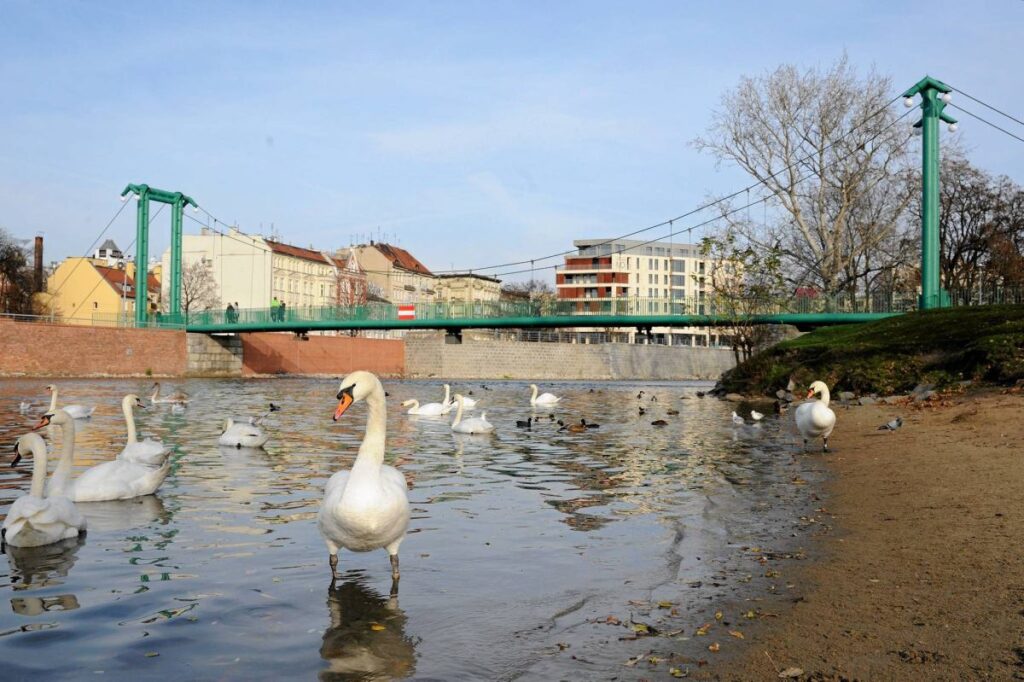
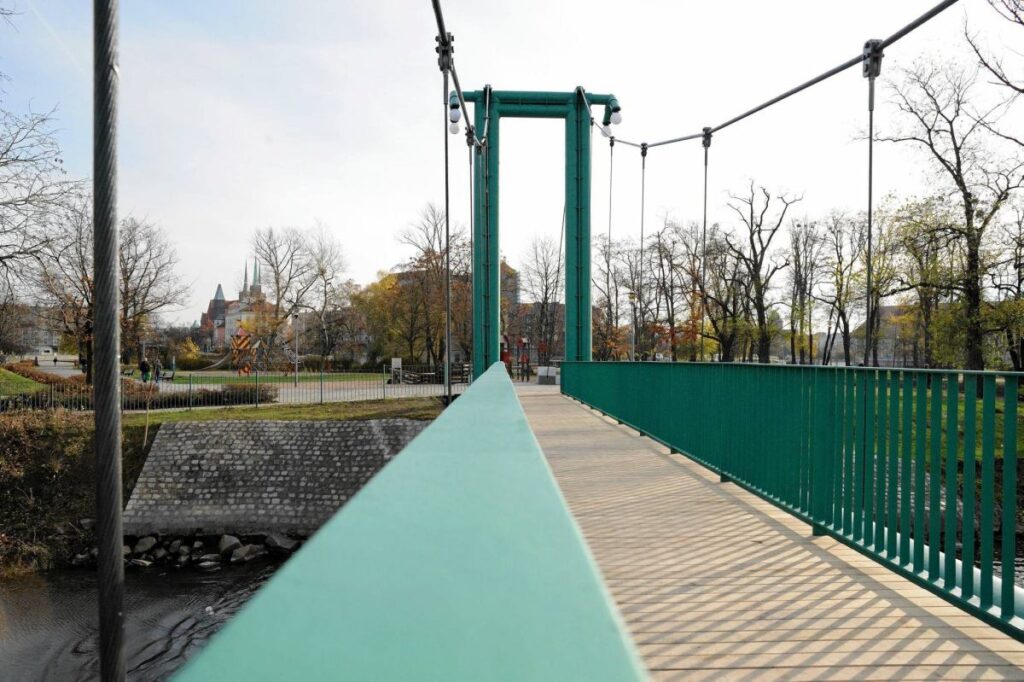
This is the quintessential walking trail in Wrocław for anyone fascinated by bridges, river views, and the city’s urban fabric. You’ll pass 19 bridges and footbridges spanning centuries of history—from medieval crossings to modern walkways—each telling part of Wrocław’s unique story as a city built on water.
What to do by the Oder river?Trail Description & Stops:
- Mosty Mieszczańskie (Mieszczańskie Bridges) – Steel structure connecting Mieszczańska and Dmowskiego streets.
- Most Władysława Sikorskiego (Sikorski Bridge) – Historic bridge with iron lattice elements.
- Mosty Pomorskie (Pomeranian Bridges) – Series of north-south road and tram bridges over the Oder.
- Most Uniwersytecki (University Bridge) – Connects the university area with Nadodrze, built in 2006.
- Most św. Macieja (St. Matthias Bridge) – Historic red brick bridge near the medieval city core.
- Most Piaskowy (Sand Bridge) – The oldest existing bridge in Wrocław, dating back to 1861.
- Kładka Piaskowa (Sand Footbridge) – Pedestrian-only bridge near Most Piaskowy.
- Kładka Słodowa (Słodowa Footbridge) – Minimalist footbridge linking Słodowa Island with the mainland.
- Kładka Żabia (Frog Footbridge) – Small pedestrian bridge leading to Wyspa Słodowa (Słodowa Island).
- Most Klary (Clara Bridge) – Lesser-known small bridge in the island area.
- Most Słodowy (Słodowy Bridge) – Historic pedestrian bridge used to access hotel and park areas.
- Mosty Młyńskie (Mill Bridges) – Twin steel truss bridges with medieval roots near the Tumski area.
- Most Tumski (Tumski Bridge / Lovers’ Bridge) – A romantic iron bridge covered in love locks.
- Kładka Muzealna (Museum Footbridge) – Small footbridge near Na Grobli Street and the Hydropolis museum.
- Most Pokoju (Peace Bridge) – Built in 1959; offers panoramic views of the Grunwaldzki Bridge.
- Most Grunwaldzki (Grunwaldzki Bridge) – Iconic suspension bridge, a Wrocław landmark.
- Most Oławski (Oława Bridge) – One of the oldest masonry arch bridges in the city.
- Kładka Zwierzyniecka (Zwierzyniecka Footbridge) – Leads to the Zoo and Hydropolis area.
- Most Zwierzyniecki (Zwierzyniecki Bridge) – A scenic, neo-Gothic bridge from the late 19th century.
- Most Szczytnicki (Szczytnicki Bridge) – Final stop; a major road bridge linking city with parkland.
Most of these stops are within central Wrocław, making the route highly walkable. As one of the most architecturally rich walking trails in Wrocław, the combination of pedestrian bridges, road bridges, and tram crossings offers fascinating variety. You’ll also enjoy changing views of the Oder River and several islands.
Tip: Download the full route map or type the bridge names one by one into Google Maps to follow this scenic line of riverfront marvels.
Urban Legends Walking Trail: Mythical Wrocław on Foot
- Theme: History, folklore, architecture, local storytelling
- Distance: ~5.5 km
- Time: ~3 hours
- Stops: 18
- Start Point: Dworzec Główny PKP (Main Railway Station)
- End Point: Piwnica Świdnicka (Market Square)
This storytelling-focused walking trail in Wrocław leads you from train tracks to medieval towers, through courtyards and past monuments that whisper of witches, warriors, and lost treasures. As one of the most imaginative walking trails in Wrocław, it invites you to discover the city’s personality through its quirky legends and the people who lived them.
Discover our favourite legends of Wrocław!Trail Description & Stops:
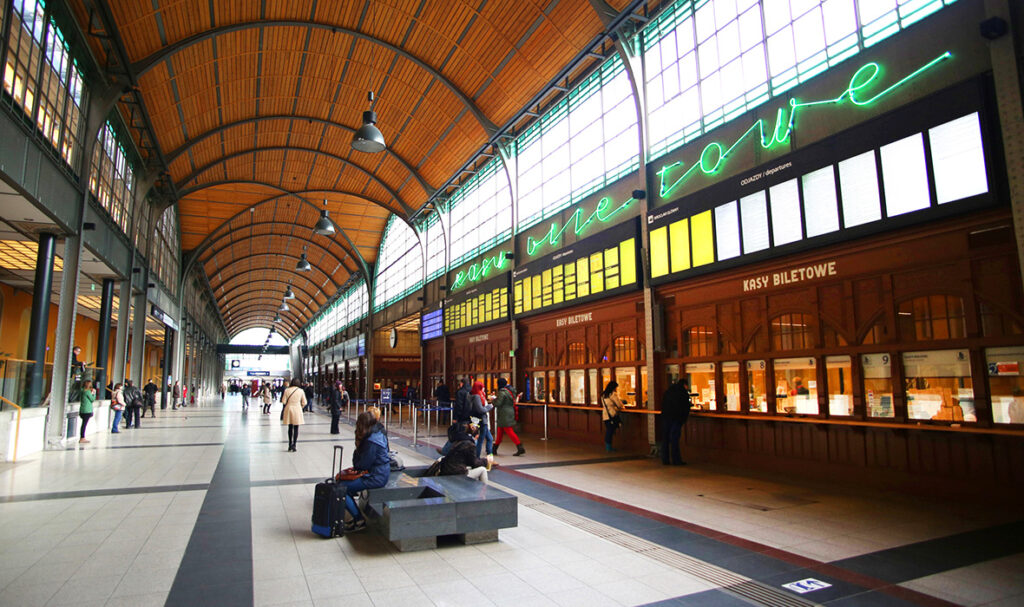
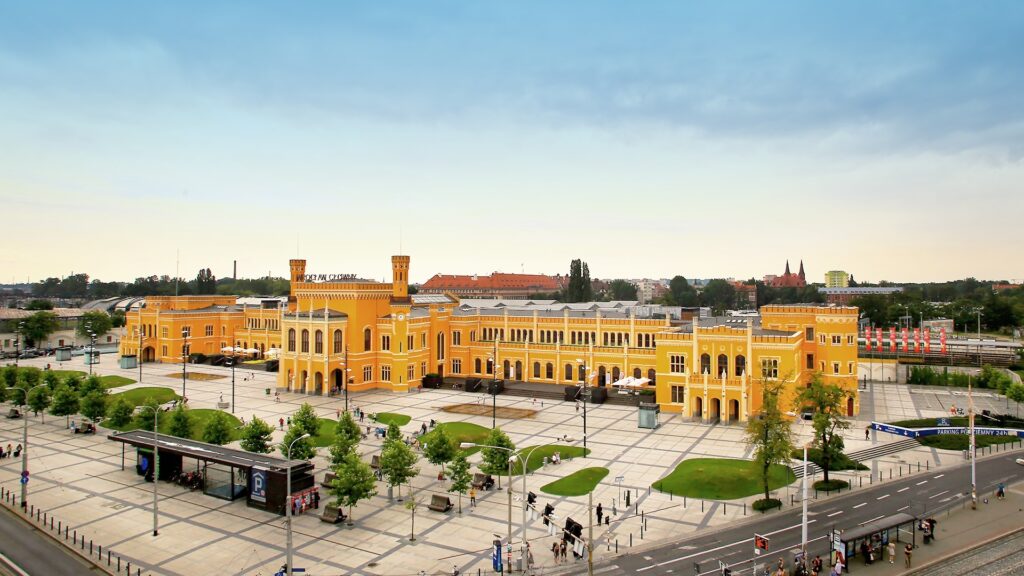
- Dworzec Główny PKP (Main Railway Station) – Neo-Gothic station with legends about underground bunkers and lost treasures.
- Wzgórze Partyzantów (Partisans’ Hill) – Ruins with myths about secret Nazi tunnels to the German consulate.
- Fontanna Krasnoludków (Plac Teatralny) (Dwarf Fountain, Theatre Square) – Symbolic site for Wrocław’s famous dwarves.
- Hotel Monopol – Historic hotel hosting Picasso, Cybulski, and maybe even Hitler.
- Pomnik Pomarańczowej Alternatywy (Orange Alternative Monument) – Celebrates anti-communist street protests led by dwarves.
- Murzynek na Aptece “Pod Murzynem” (Plac Solny) (Statue of the Black Man at the Old Pharmacy) – A curious sculpture with an accidental medical discovery.
- Jaś i Małgosia & Kościół św. Elżbiety (Hansel & Gretel Houses & St. Elizabeth’s Church) – Site of ancient rebellion, fiery tower falls, and artistic eccentricities.
- Stare Jatki & Pomnik Zwierząt Rzeźnych (Old Butchers’ Lane & Slaughtered Animals Monument) – Artistic courtyard and tribute to forgotten animals.
- Skamieniałe Tancerki (Szewska 50/51) (Petrified Dancers Relief) – 12 girls cursed for dancing on Good Friday.
- Szermierz (Plac Uniwersytecki) (The Swordsman Statue) – Nude duelist guarding university traditions.
- Powodzianka (Most Uniwersytecki) (The Flood Lady Sculpture, University Bridge) – Honors the 1997 flood heroines.
- Mosty Młyńskie (Mill Bridges) – Scene of a 1503 witch trial where the accused miraculously survived.
- Most Tumski (Tumski/Lovers’ Bridge) – A place of love, locks, and whispered secrets.
- Kościół św. Krzyża (Holy Cross Church) – Built after a legendary reconciliation and a miraculous root discovery.
- Pomnik Nepomucena (St. John of Nepomuk Statue) – A baroque monument with unusual bald cherubs.
- Katedra św. Jana Chrzciciela (Cathedral of St. John the Baptist) – Watch for the famous stone head and controversial carvings.
- Brama Kluskowa (Dumpling Gate) – A magic dumpling turned to stone after a greedy mistake.
- Most Pokoju & view of Most Grunwaldzki (Peace Bridge & Grunwaldzki View) – Spot of aerial stunts and architectural marvels.
- Kościół św. Wojciecha (St. Adalbert’s Church) – Saved by a holy fire during a Mongol invasion.
- Kościół Marii Magdaleny & Mostek Pokutnic (Church of St. Mary Magdalene & Penitent Bridge) – Where ghostly maids sweep for eternity.
- Ratusz i Piwnica Świdnicka (Town Hall & Świdnicka Cellar) – Legendary beer hall with an underground tunnel mystery.
This trail is ideal for curious minds—each stop reveals bizarre anecdotes, from mischievous dwarves and petrified dancers to underground train myths and golden dumpling lore. Among the more whimsical walking trails in Wrocław, it’s also a visually stunning route, moving from neo-Gothic train halls to medieval cathedrals and Renaissance alleyways.
Tip: Use Google Maps to locate each stop and follow in sequence. If you’re short on time, the trail can be split over two days.
Lace Up Your Shoes to Explore Walking Trails in Wrocław!
Exploring walking trails in Wrocław is more than just a way to sightsee—it’s a chance to connect with the city’s soul. Whether you choose a peaceful nature loop, a tour of engineering marvels, or a trail of tales and myths, Wrocław reveals itself step by step. Lace up your shoes, charge your phone, and go make memories!
And for those who prefer riding a bike, we listed the best cycling routes in the city!