In the heart of the city lies a place where cobblestones remember the footfalls of dukes, bishops, and lovers. The Cathedral Island in Wrocław is the cradle of the city’s history and one of its most enchanting corners. With gas lanterns glowing each evening and stories echoing from the walls of Gothic churches, it’s a living postcard from Wrocław’s thousand-year-old past. Step through its gates and you step back in time.
The Birthplace of Wrocław
The Cathedral Island in Wrocław (in Polish known as Ostrów Tumski) is the city’s oldest district, the original nucleus around which it grew. Though it was once surrounded by the waters of the Oder River, it has been connected to the mainland since 1824. This strategic island was ideal for a stronghold, and in the 10th century, a wooden settlement was established by the Piast dynasty. By the 11th century, stone and brick structures began to rise. In 1000 AD, the establishment of a bishopric transformed the island into a powerful religious center that continues to this day.
Icon of the city: what do you know about the Wrocław’s historic marketplace?Medieval Power and Sacred Architecture
The Cathedral Island in Wrocław bore witness to the legacy of the Piast dukes. Bolesław the Tall replaced wooden defenses with a fortified brick residence in the 12th century, turning the island into a political stronghold. Though the ducal residence eventually fell into disuse and was dismantled, the Chapel of St. Martin survived and still stands as a church today.
Dominating the skyline is the monumental Cathedral of St. John the Baptist. Standing 97 meters tall, it is the highest historic building in Wrocław and often referred to as the “mother of Silesian churches.” After suffering heavy damage in World War II, the cathedral was lovingly restored. Its prized silver altar, funded by Bishop Andreas Jerin in 1591, has recently been reinstated, adding to the cathedral’s grandeur.
Other notable landmarks on the Cathedral Island in Wrocław include the 13th-century Collegiate Church of the Holy Cross and St. Bartholomew, the late Romanesque Church of St. Giles, and the compact yet significant Church of St. Martin. Each of these sacred buildings adds depth to the area’s spiritual and historical landscape.
The Gas Lantern Glow and the Lantern Keeper
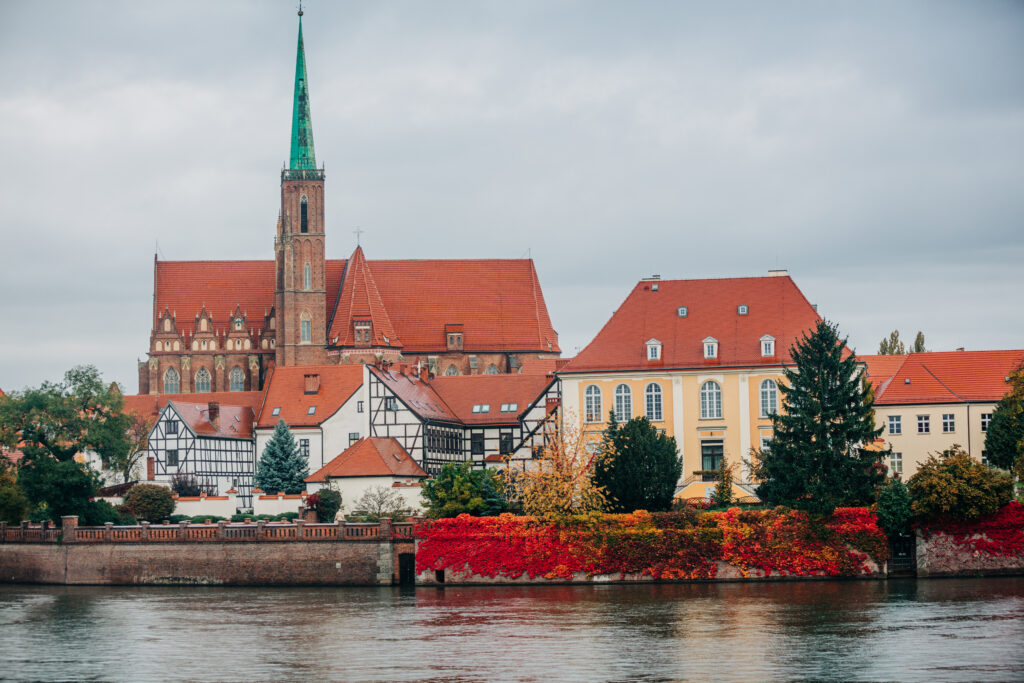
What makes the Cathedral Island in Wrocław truly magical are its gas lanterns. Nearly 100 of these antique lamps cast a soft, golden glow along its streets every night. They’re not automatic; they’re hand-lit by Robert Molendo, Wrocław’s beloved lamplighter.
Some people call me a tourist attraction, others say I’m the mascot of Wrocław, but I love this job. It’s a tradition.
says Molendo.
Wearing a distinctive black cloak with the city’s crest and a top hat, Molendo has performed this ritual for over 16 years. His 3.5-kilometer journey starts at dusk—3:20 pm in winter, 9:00 pm in summer. Each lamp is lit with a 2.5-meter-long pole called a “polityka.” Tourists follow him, enchanted, snapping photos and videos.
More than Monuments: A Living Quarter
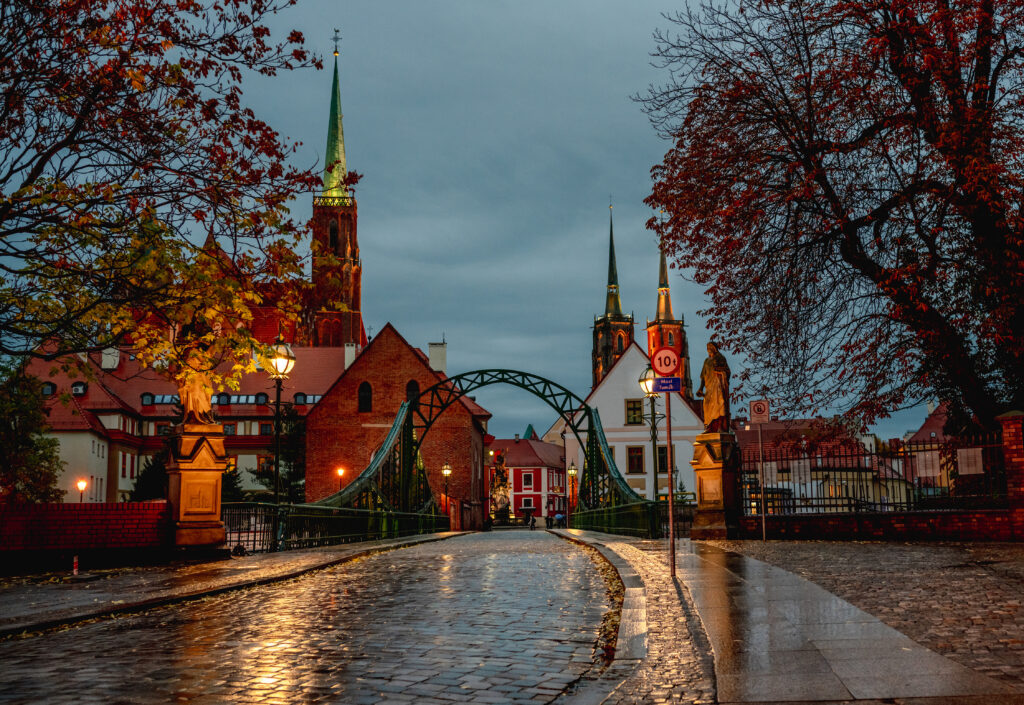
The Cathedral Island in Wrocław is not just about stone and history. It is full of life and legends. Couples now hang love padlocks along the nearby boulevards instead of the Tumski Bridge, which underwent renovation and no longer permits them. A bronze statue of Pope John XXIII stands as a quiet sentinel, and the Archdiocesan Museum displays priceless sacred art including the Book of Henryków, the first written sentence in Polish, and the Madonna under the Firs, a recovered masterpiece by Lucas Cranach the Elder.
Discover the story of Wrocław’s unique guardians: little dwarfs!Legends of the Island
As you stroll across the Cathedral Island in Wrocław, local legends await. The Kluskowa Gate tells the story of a dumpling that escaped to the top of the gate after a promise was broken. Another tale recounts a heartbroken youth turned criminal whose face was immortalized in the cathedral wall—a stone warning etched in time.
A Timeless Place
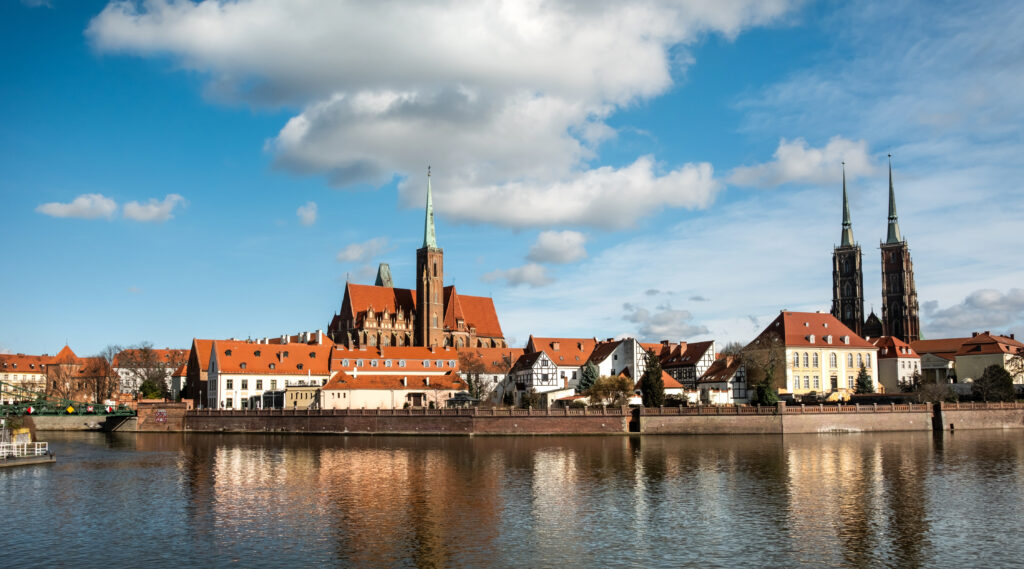
History, spirituality, and romance converge on the Cathedral Island in Wrocław. It’s a place where Gothic architecture whispers secrets and every alley tells a story. Whether you come to admire the architecture, chase the lamplighter, or simply feel the soul of the city, this island is not just a place to see—it’s a place to experience.