When heavy rain arrives in Wrocław, the instinct has traditionally been to get the water away as quickly as possible. The city is now taking a different approach: wherever possible, rainwater should stay where it falls.
That principle is at the centre of Wrocław’s updated approach to managing rainfall, as the city faces two increasingly familiar extremes: long periods of dry weather and sudden, intense downpours that can overwhelm urban drainage systems.
Since 25 June 2026, updated guidelines for rainwater management, known as Gospodarowanie Wodami Opadowymi or GWO, have been in force in Wrocław. Introduced through an order by the Mayor of Wrocław, the guidelines establish common standards for planning, designing and delivering municipal investments.
MPWiK Wrocław has now begun a programme of training for municipal companies and institutions involved in preparing and delivering those projects.
The aim is straightforward. Rainwater should be treated as a resource to manage, rather than simply something to remove.
Keeping Rainwater in the City
The new approach puts a clear hierarchy on how rainfall should be handled.
Where conditions allow, water should first be managed on the site where it falls. Green-blue infrastructure, retention and infiltration should be considered before relying on conventional rainwater drainage.
That can include:
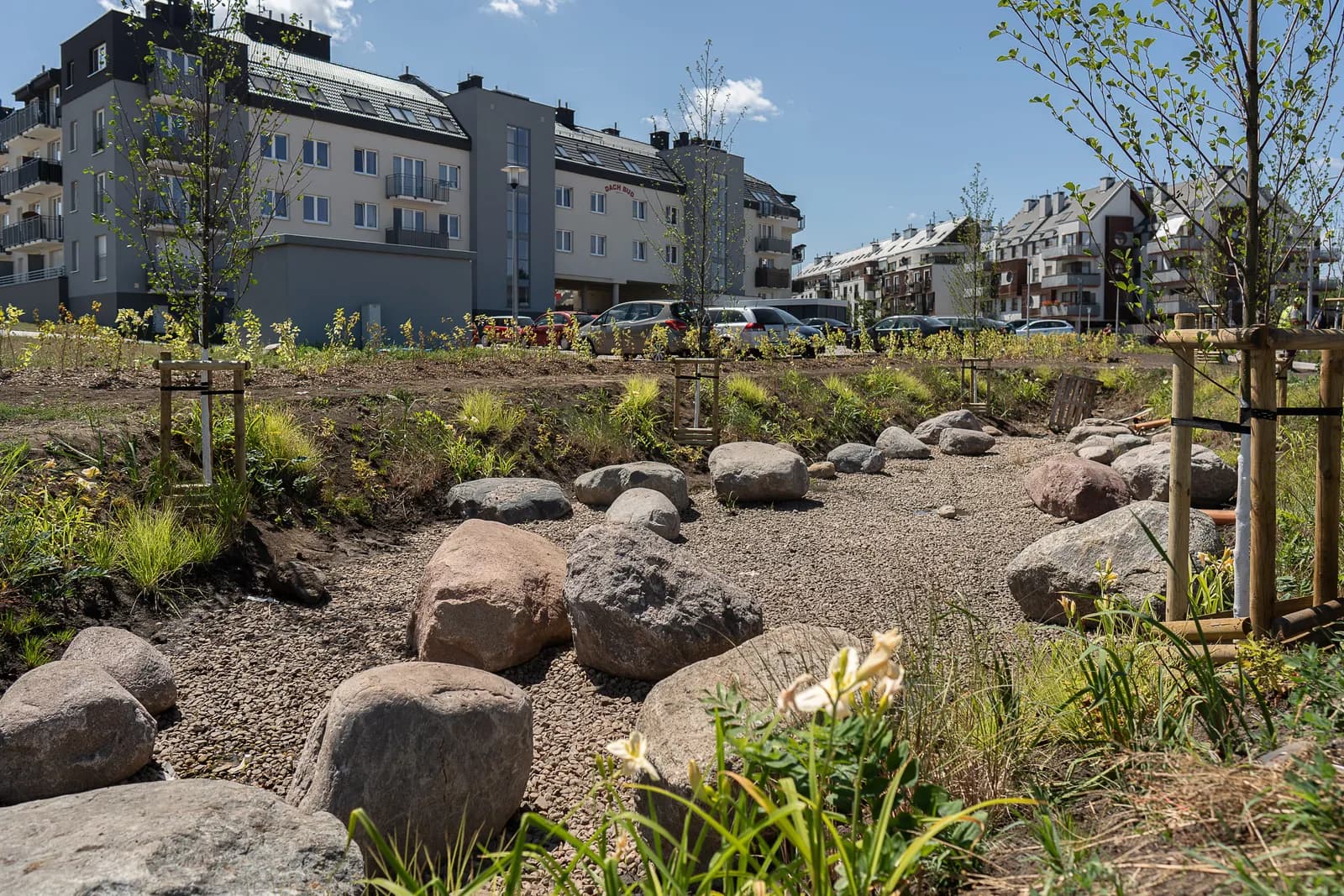
rain gardens
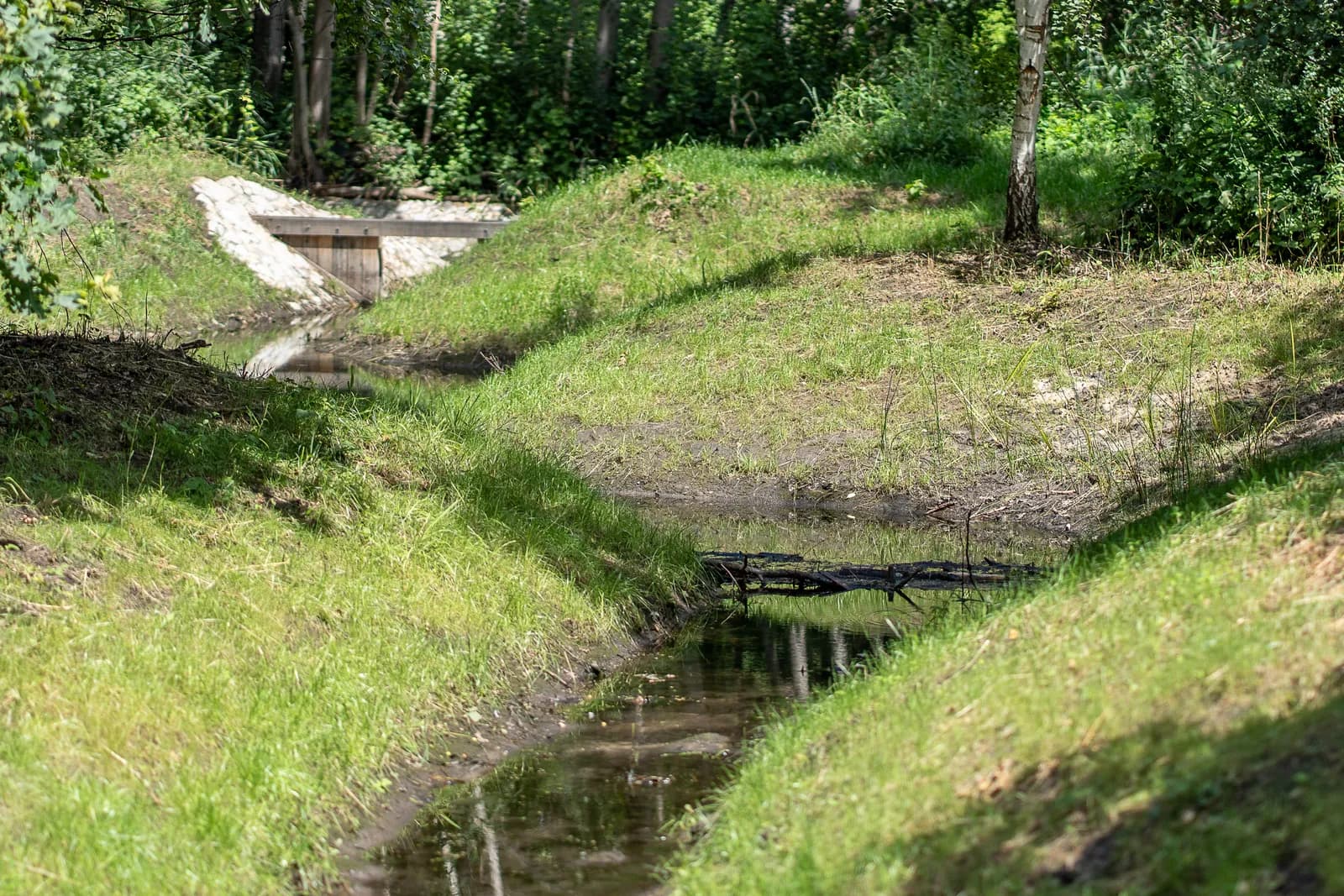
retention basins
infiltration systems
biologically active surfaces
other landscape-based water management solutions
The principle is not to eliminate drainage infrastructure. Instead, the stormwater network should deal primarily with the water that cannot reasonably be retained or managed locally.
MPWiK describes this as a shift from simply draining rainfall towards managing it in a more sustainable way. The company's existing rainwater policy follows the same sequence, with green-blue infrastructure and local retention considered before additional drainage capacity.
For a city such as Wrocław, this is particularly relevant. Its complex network of rivers, streams and drainage basins means that rainfall does not follow administrative boundaries. What happens on one site can affect another part of the same basin.
A City-Wide Standard For New Projects
The updated GWO guidelines are intended to make the process more consistent.
Municipal companies and institutions preparing investments must now apply the principle of managing rainfall at the point where it occurs. The guidelines also cover project documentation, basin analysis and the identification of existing infrastructure connected with rainwater management.
Wrocław has been preparing for the effects of climate change for years. Today, we know that expanding the sewerage infrastructure alone is not enough. We must retain water where it has fallen, make use of the potential of green-blue infrastructure and design the city so that it is more resilient to extreme weather events. The new rainwater management standards are an important step in this direction, and I hope they will be consistently implemented by all municipal entities carrying out investments.
- Jacek Sutryk, Mayor of Wrocław
For residents, the change may eventually be visible in places that look less like traditional drainage infrastructure and more like parks, planted areas and redesigned public spaces.
That is an important part of the thinking behind green-blue infrastructure. The same piece of urban landscape can provide somewhere for people to spend time while also helping absorb, slow or store rainfall.
Training the People Behind Wrocław’s Investments
The first training programme organised by MPWiK is aimed at representatives of municipal companies and institutions responsible for preparing and delivering investments.
The practical side is important. Przemysław Gałecki, the Vice-President of MPWiK Wrocław, says understanding the GWO requirements before a project reaches the construction stage can influence everything from tender documentation to cooperation with architects, engineers and contractors:
Rainwater knows no boundaries between plots, entities or investors. That is why we need a common approach to designing investments throughout the city. The training sessions are intended to help everyone involved in the investment process better understand the objectives of the new guidelines and implement them effectively in practice. This will allow us to deliver investments that are safer, more resilient to climate change and better suited to the needs of residents.
The city also plans to extend training to companies involved in designing commercial developments.
That matters because the new approach is not limited to projects commissioned directly by the municipality. MPWiK and the city are working together on training for private-sector designers, with the intention of encouraging the same principles in commercial investment.
From Orląt Lwowskich Square to Krzycki Park
Wrocław already has examples of what this approach can look like when implemented.
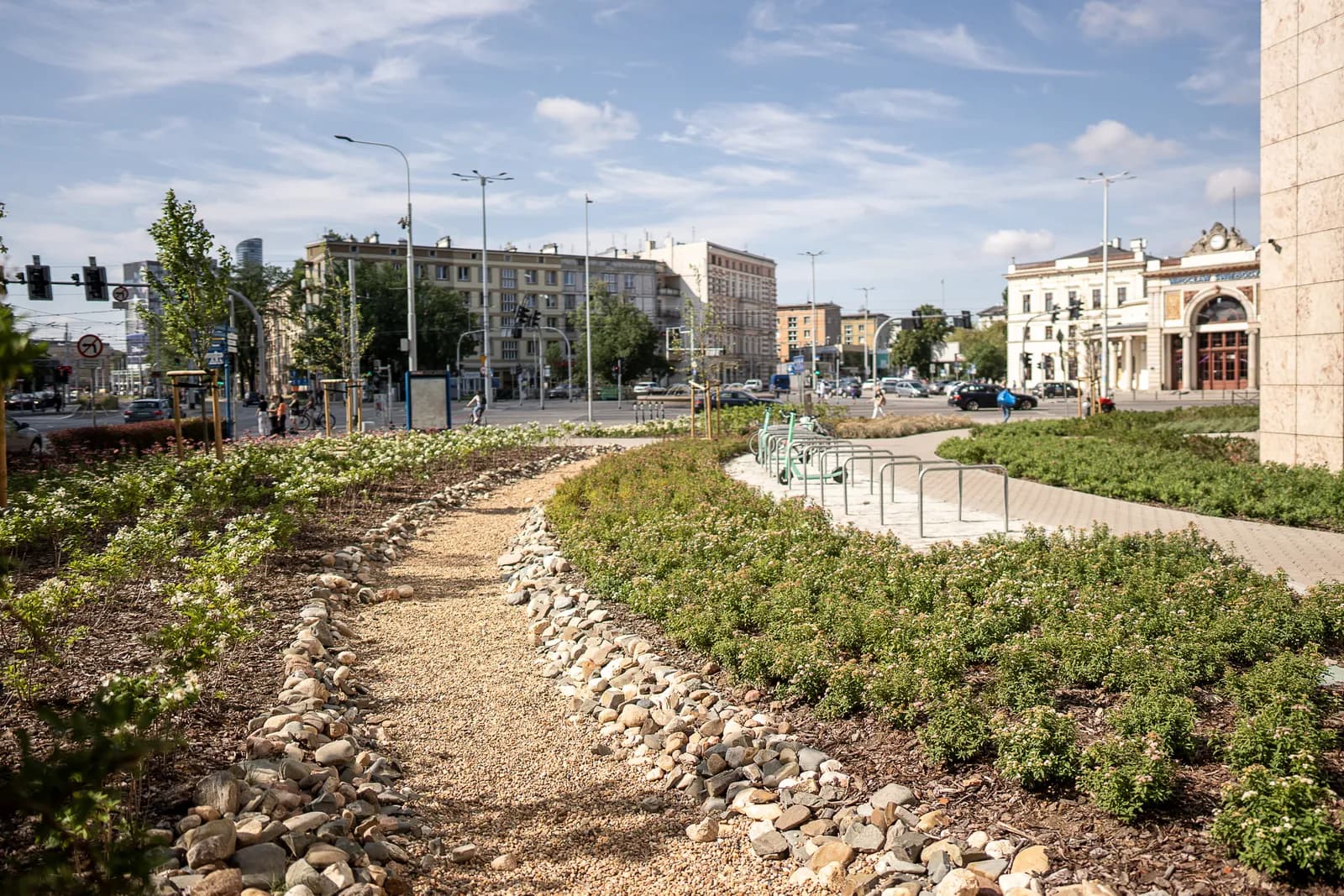
Rain gardens have been introduced at Plac Orląt Lwowskich, creating areas designed to retain rainfall while contributing to the city's wider retention system.
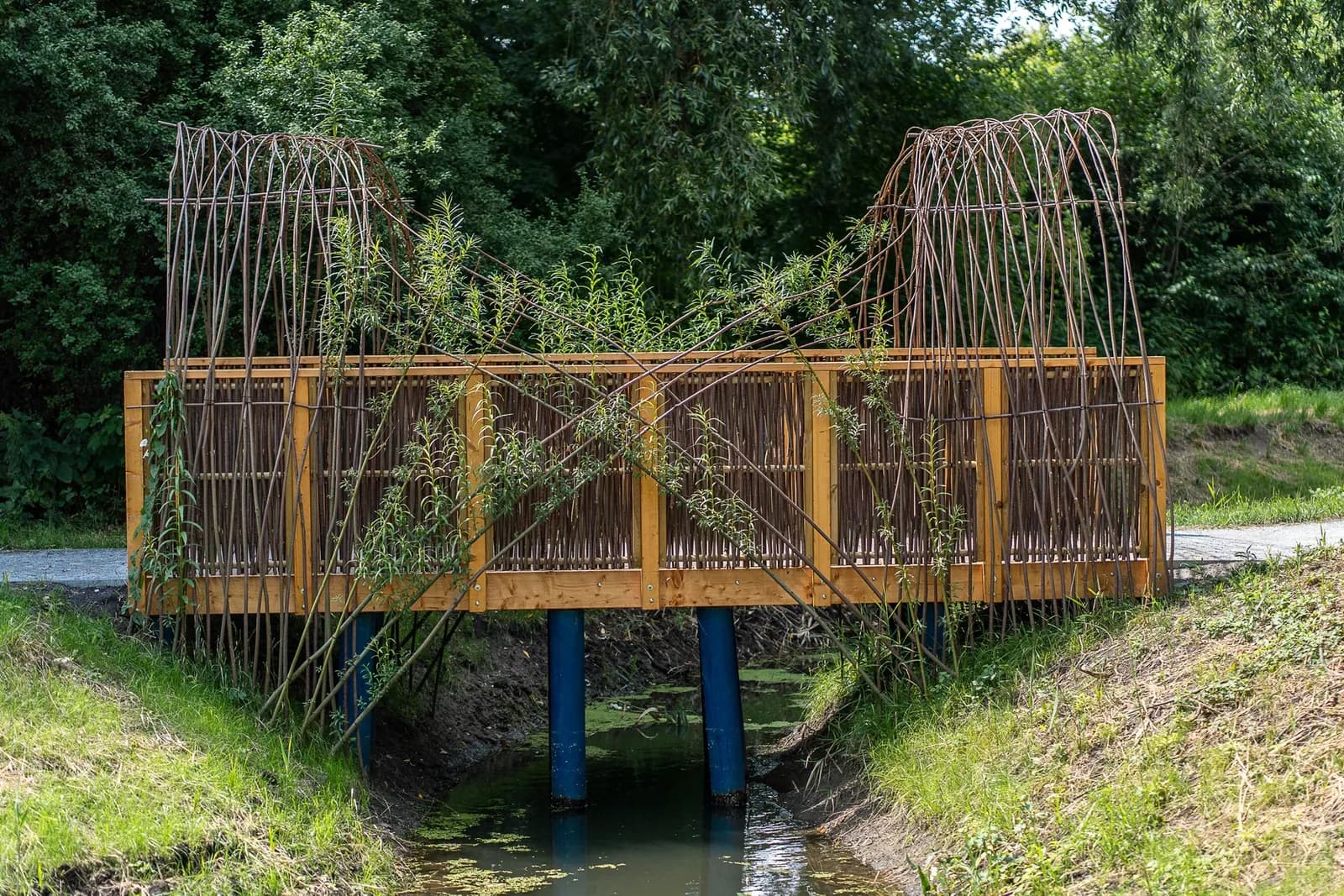
Krzycki Park has also been redesigned following requests from residents. The resulting space combines recreational use with rainwater retention, demonstrating how climate adaptation does not necessarily mean sacrificing the everyday functions people expect from a public park.
These projects illustrate a broader change in the way urban water management is being considered. Instead of separating drainage from public space, the two can be planned together.
We want designers and investors to see rainwater as a valuable resource, essential to manage where rainfall occurs, rather than a problem solved by sending it as quickly as possible to a receiving body. The guidelines organise the design process and support the selection of appropriate solutions based on local geological and hydrological conditions and the needs of the entire basin. This allows us to design more effectively, reduce errors and achieve real environmental and social benefits,
- Rafał Błaszczyk, Rainwater Management Manager at MPWiK Wrocław
Wrocław's wider rainwater strategy already places increased local retention at its centre. MPWiK says the city is using hydrodynamic modelling to help understand its drainage system, identify locations suitable for local retention and inform future investment decisions.
What This Could Mean for Future Developments
The new standards are likely to have their greatest impact gradually, as new municipal and private projects move through the planning and design process. For architects, developers and public bodies, rainfall will increasingly need to be considered as part of the site's overall design rather than simply as a drainage calculation.
That can mean allowing more space for planting, permeable surfaces and retention features, while considering the wider basin rather than looking only at an individual plot. It also reflects a growing understanding that the most effective response to heavy rainfall is not always to build more pipes.
Preparing for Both Drought and Downpours
The logic behind the policy is particularly relevant during periods of extreme summer weather.
Long dry spells increase pressure on water resources, while intense storms can produce large volumes of runoff in a very short time. Holding rainfall back when it arrives creates an opportunity to use that water later, while also reducing the immediate pressure on drainage systems.
The benefits can extend beyond flood prevention. More planted areas and water-sensitive public spaces can contribute to greener neighbourhoods and more comfortable urban environments.
Climate adaptation requires consistency and cooperation between many different entities. That is why we want all investments carried out by the city to follow the same standards. In this way, we are creating a coherent system that not only reduces the risk of local flooding, but also improves the quality of public spaces and living conditions for residents. Naturally, we encourage private investors to do the same. Treating rainwater as a resource seems beyond dispute in the context of the weather conditions we are currently experiencing,
- Katarzyna Szymczak-Pomianowska, Director of the Department of Strategy and Sustainable Development at Wrocław City Hall
The city says it will monitor the effects of the new approach, while MPWiK continues its training programme.
For Wrocław, the bigger change is cultural as much as technical: rainfall is increasingly being considered something the city should work with, rather than simply something it needs to move away.
Source and image credit: MPWiK Wrocław