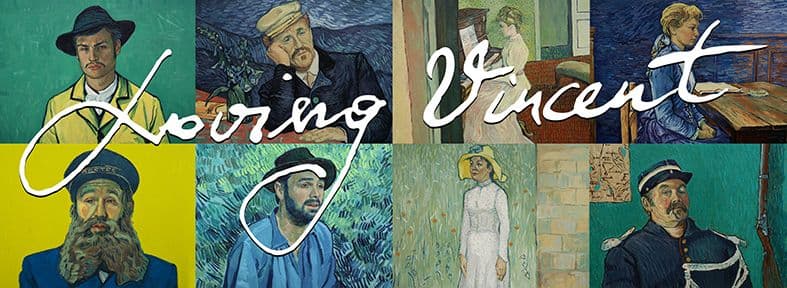
At first glance, Loving Vincent may seem like an animated film in van Gogh’s style, but it is far more: the world’s first feature-length movie painted by hand—65,000 oil frames brought to life. Few know it was born in Wrocław, co-produced by the city with local artists. The story of Loving Vincent is equally striking, a five-year project that explores the mystery of van Gogh’s death while celebrating his life and genius.
A Mystery Revisited
The narrative of Loving Vincent revolves around the final days of Vincent van Gogh, who died in 1890 in Auvers-sur-Oise under ambiguous circumstances. Traditionally believed to have taken his own life after receiving troubling news about his brother’s finances, van Gogh’s death has long been shrouded in speculation.
We didn’t believe in the simple version of suicide. We wanted to confront the myths and multiple theories surrounding his death. Above all, we wanted to bring Vincent to life again—through his paintings, his letters, and the people who knew him.
explained Hugh Welchman, the film’s co-director, in an interview with wroclaw.pl.
By weaving together accounts from van Gogh’s correspondences and biographies, the film suggests alternative explanations—including the possibility that the painter may not have died by his own hand. This detective-like structure keeps viewers captivated while painting a portrait of a man who was at once vulnerable, brilliant, and misunderstood.
Plan your next date with our guide to the most romantic places in Wrocław!Film Like No Other
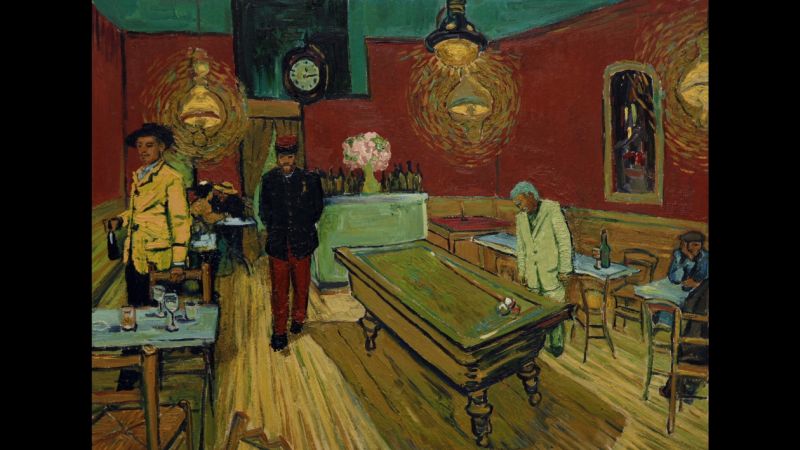
Welchman, together with Polish director Dorota Kobiela, created what had never before been attempted: a full-length painted animation. Every frame of the film was hand-painted in oils on canvas, echoing van Gogh’s own medium. Each second of film required 12 paintings, with artists often spending up to a day completing a single frame.
In total, around 125 painters—many of them graduates of the Academy of Fine Arts in Wrocław—worked on the film. For most, it was the opportunity of a lifetime: not just to copy van Gogh’s iconic works but to animate them, to breathe motion into brushstrokes that once stood still.
We decided it would be easier to train painters to animate than to train animators to paint like Vincent.
said Dorota Kobiela in her conversation with wroclaw.pl.
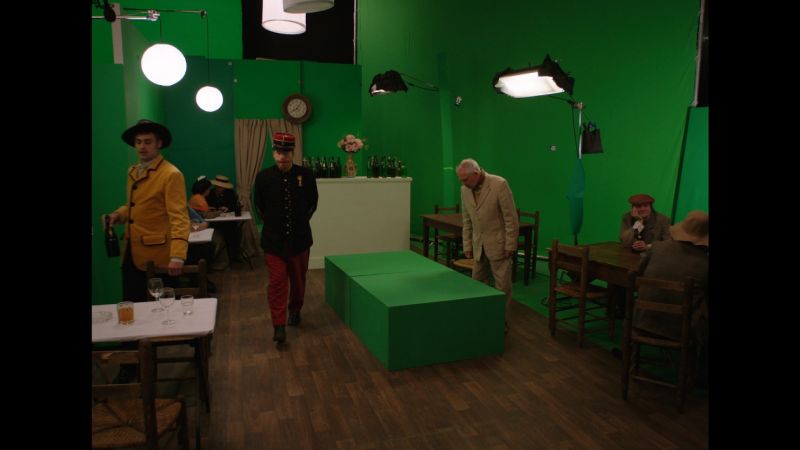
To achieve this, the team developed a unique technology called PAWS (Painting Animation Work Station). This system allowed painters to photograph each canvas and make incremental changes, which were then strung together into moving sequences.
While the idea of painting frame by frame was not new in itself, no one had ever attempted it on such a scale. The result was breathtaking: a film where familiar masterpieces—like The Starry Night or Portrait of Dr. Gachet—come alive before the viewer’s eyes.
An International Effort with a Wrocław Heart
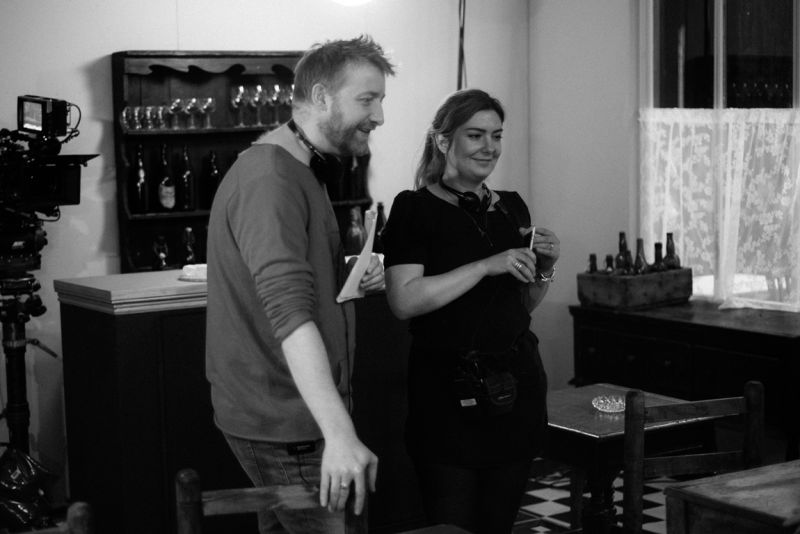
Though painters came from 19 countries—including the United States, Greece, and Ukraine—Wrocław played a central role in shaping the film. The city not only served as a co-producer, alongside the Lower Silesian Film Fund (Odra-Film) and the Centre for Audiovisual Technologies (CeTA), but also hosted test shoots and provided crucial studio space.
This club is the go to place for live music, nice cocktails and unique vibe!Dozens of local artists were recruited, many at the start of their careers, and became part of this pioneering project. Their contribution helped put Wrocław on the map as a centre of experimental cinema, linking the city’s rich artistic heritage with cutting-edge film innovation.
Famous Faces in Painted Frames
While the paintings were the soul of Loving Vincent, the performances gave the characters depth. Well-known actors posed as historical figures before being “transformed” into van Gogh’s painted world.
Oscar-nominated Saoirse Ronan (Atonement, The Grand Budapest Hotel) took on the role of Marguerite Gachet, while Jerome Flynn (Game of Thrones) played Dr. Gachet so convincingly that audiences gasped—he seemed to have stepped straight out of van Gogh’s canvas. Douglas Booth portrayed Armand Roulin, and Vincent himself was played by Robert Gulaczyk, a graduate of the Wrocław Theatre Academy.
The Polish-language version of the film featured an equally star-studded cast, including Danuta Stenka, Jerzy Stuhr, Maciej Stuhr, and Robert Więckiewicz.
A Triumph on the World Stage
Upon its release, Loving Vincent became a global phenomenon. The film was sold to nearly 140 countries, won the European Film Award for Best Animated Feature, and received prizes at prestigious festivals in Annecy and Shanghai. It also earned an Academy Award nomination and widespread critical acclaim for its artistry and originality.
The success was also a triumph for its production company, BreakThru Films, founded by Hugh Welchman in London. The studio had already won an Oscar for the short film Peter and the Wolf (2008), but Loving Vincent was its boldest experiment yet.
A Love Letter to Vincent
Perhaps the most touching element of the film is its title. “Twój Vincent” (“Your Vincent”) were the words van Gogh often used to sign his letters to his brother Theo. The film, in its entirety, feels like one long letter back—a cinematic message of admiration, grief, and respect to an artist who lived too briefly but left a monumental mark on culture.
For me, Loving Vincent was born from uniting my two passions—painting and film. It became not only a film about him but also my way of thanking him.
said Kobiela in her interview with wroclaw.pl.
Wrocław’s Painted Gift to World Cinema
Loving Vincent is more than just a film—it is a fusion of art forms, a cultural experiment, and a tribute to one of history’s most misunderstood geniuses. And for Wrocław, it is also a badge of honour.
Discover the best museums in Wrocław that offer visits in English!Through the labour of over 100 painters, countless sleepless nights, and a bold creative vision, the team behind Loving Vincent achieved something great. Just like van Gogh himself, they chose a path that was unconventional and breathtakingly original.