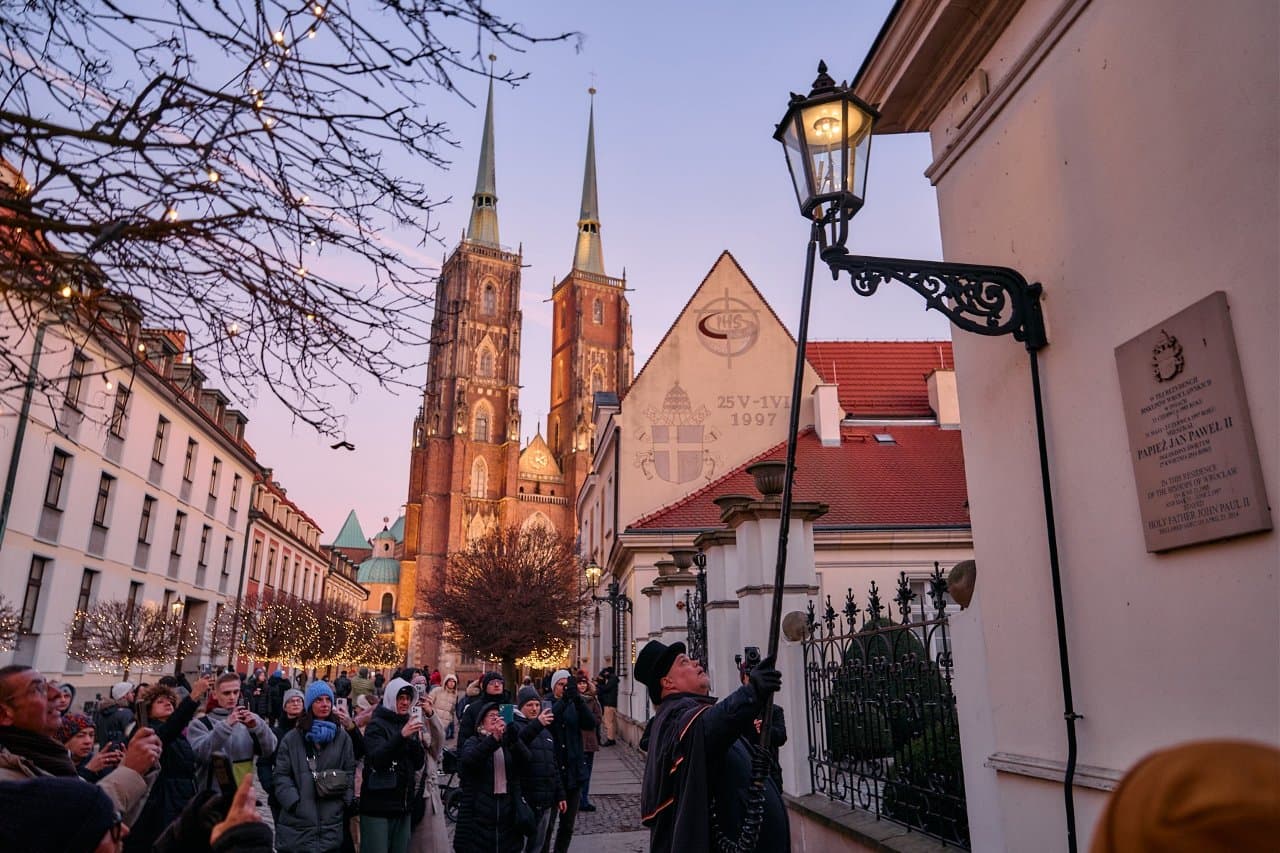
Discover Wrocław’s unique lamplighter tradition, where historic gas lamps are still lit by hand every evening on Ostrów Tumski.
As evening falls over Wrocław, when the streets of Ostrów Tumski begin to quieten and the first lights appear along the historic lanes, a familiar figure begins his daily walk. Wearing a dark cape and traditional top hat, the city’s lamplighter carries out a task that has almost disappeared from modern Europe: lighting street lamps by hand.
The Wrocław lamplighter, known locally as latarnik z Ostrowa Tumskiego, is one of the city’s most unusual living traditions. While most European cities replaced gas lighting with electricity generations ago, Wrocław has preserved a small part of its urban heritage. Each evening, the historic gas lamps of Ostrów Tumski are still brought to life manually, creating a distinctive atmosphere in the city’s oldest district.
For visitors, the lamplighter has become one of Wrocław’s most charming sights. For residents, he represents something deeper: a connection between the modern city and the everyday routines of earlier generations.
A city once lit by gaslight
Before electric street lighting transformed European cities, lamplighters were a common sight. Their work followed the rhythm of the day. At dusk, they walked through the streets lighting gas lamps one by one. In the morning, they returned to extinguish them.
Gas lighting arrived in Wrocław in the 19th century, during a period of rapid urban development. As the city expanded, public lighting became an important part of everyday life, improving safety and allowing streets to remain active after dark.
Over time, however, technology changed. Electric lighting gradually replaced gas lamps, and the profession of the lamplighter disappeared from most cities. What was once a familiar occupation became a memory preserved mainly in photographs, museums and historical accounts.
Ostrów Tumski followed a different path. The historic character of the district, with its churches, cobbled streets and preserved architecture, provided the ideal setting for maintaining its traditional gas lamps.
Evening magic on Ostrów Tumski
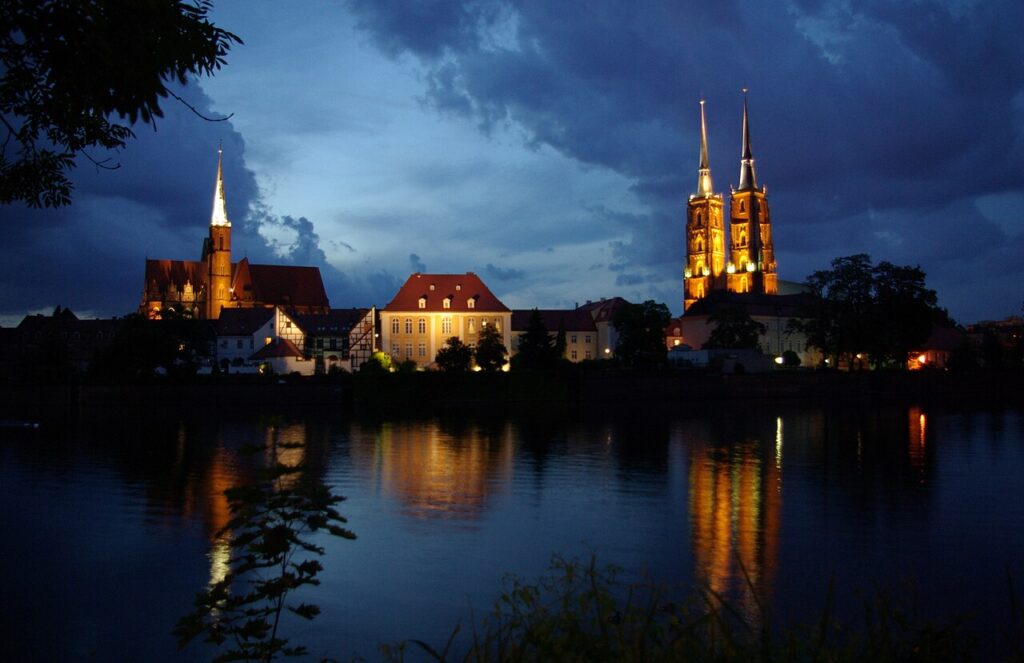
Ostrów Tumski is Wrocław’s oldest part and one of the city’s most atmospheric areas. Located near the River Oder, the district is best known for its impressive churches, including the Cathedral of St John the Baptist, as well as its peaceful streets away from the busier parts of the city centre.
The appearance of the lamplighter at sunset adds another layer to the experience. Visitors walking through the district can watch as the lamps slowly illuminate the streets, changing the mood from a daytime historic site into an evening setting that feels connected to another era.
The exact lighting time changes throughout the year because it follows seasonal sunset times. Those hoping to see the tradition in action should arrive shortly before dusk and take a leisurely walk around the cathedral area.
More than a tourist attraction
The lamplighter is often described as a curiosity, but the tradition has wider significance. Across Europe, many historic practices have disappeared as cities modernised. Wrocław’s decision to preserve manually lit gas lamps shows how heritage can remain part of everyday life rather than becoming something found only behind museum glass.
The tradition also reflects the character of Wrocław itself. The city has a long history of change, with different cultures, architectural influences and historical periods leaving their mark. Small details, such as the lamplighter walking through Ostrów Tumski each evening, help create a sense of place.
For international visitors, it offers a different way to experience the city. Instead of simply viewing historic buildings, they can witness a tradition that is still happening as part of the normal daily routine.
Meeting a piece of living history
The Wrocław lamplighter does not perform a staged historical show. He is carrying out a real responsibility connected with maintaining the city’s historic lighting system. The traditional clothing, including the cape and top hat, helps preserve the visual identity of the role and makes the figure instantly recognisable.
For photographers and visitors, the moment when the first lamps begin to glow is particularly memorable. The combination of historic architecture, evening light and the lamplighter’s route creates one of Wrocław’s most distinctive scenes.
However, visitors should remember that the lamplighter is working. It is best to allow him space to complete his route and enjoy the experience respectfully.
Why this daily ritual still matters
Many cities celebrate their history through monuments, museums and restored buildings. Wrocław also preserves its past through small daily rituals. The lamplighter’s evening walk is one of these traditions.
In a time when many urban experiences are becoming increasingly similar, the sight of someone lighting gas lamps by hand offers something rare: a direct link between the past and the present.
For anyone exploring Wrocław, especially in the evening, a visit to Ostrów Tumski provides the opportunity to see a tradition that has survived through changing times. It is a reminder that history is not only found in old buildings. Sometimes it walks quietly through the streets carrying a lantern.
Plan your visit: When and where to see the lamplighter
- Location: Ostrów Tumski (Cathedral Island), Wrocław
- Best time to see the lamplighter: Around sunset
- Season: The lamplighter tradition continues throughout the year, with times changing according to daylight hours
- Tip: Combine your visit with an evening walk around Wrocław Cathedral and the historic riverside area
A tradition that still shines after dark
Wrocław’s lamplighter is one of the city’s most distinctive traditions, preserving a small but meaningful connection with the past. As modern cities continue to change, this simple evening ritual on Ostrów Tumski remains a reminder of the people, skills and customs that shaped urban life before the age of electric light.
Click here to find more things to do in Wrocław!