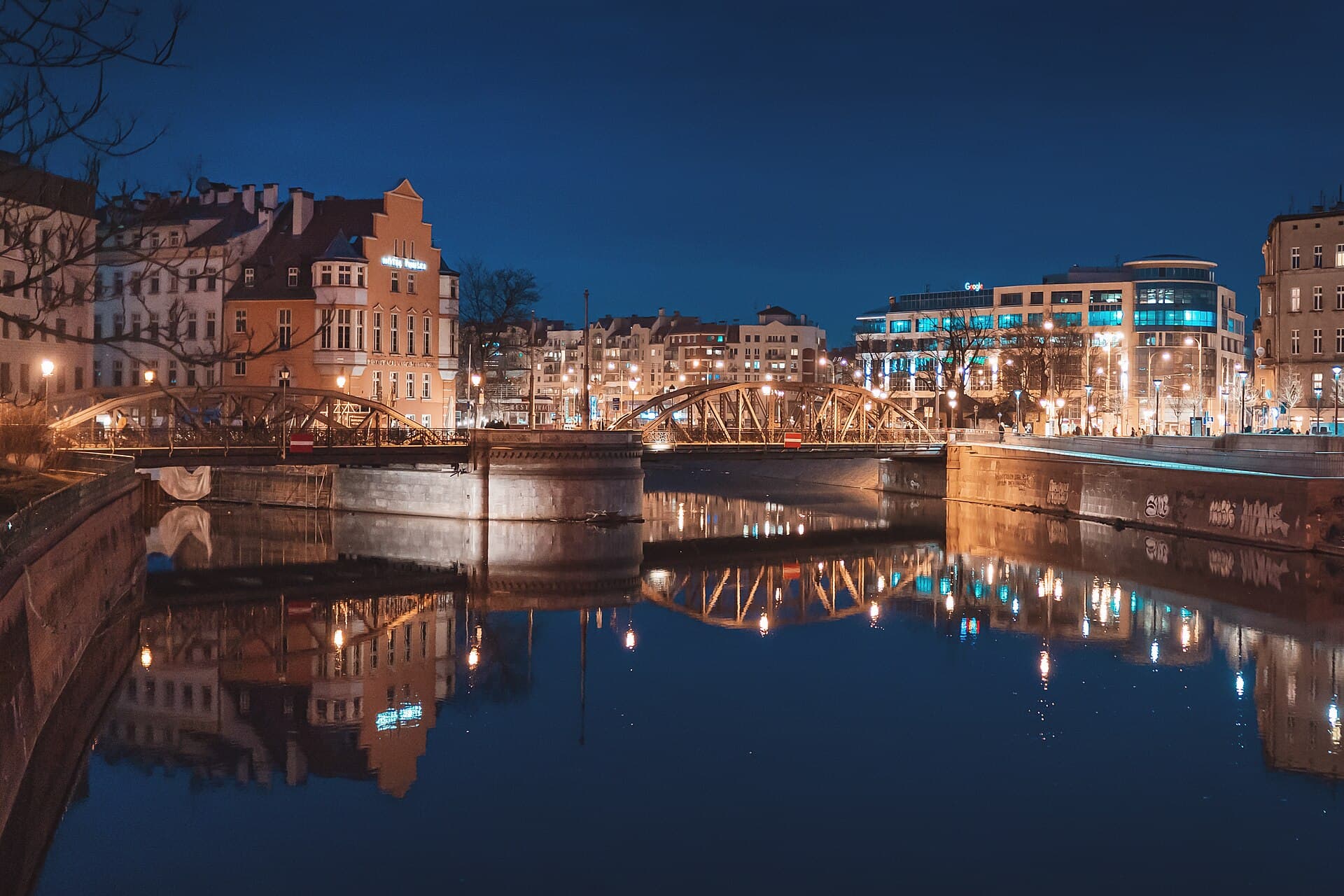
Wrocław is a city built around water. The Odra River and its many channels shape its neighbourhoods, create its islands and influence the rhythm of daily life. Connecting these waterways are more than 100 bridges and footbridges, each reflecting a different chapter of the city’s history.
Some bridges carry trams and thousands of commuters every day. Others are quiet walking routes beside historic buildings and riverside parks. Together, they form one of Wrocław’s most recognisable features and offer a unique way to explore the city.
A City Shaped by the Odra
Wrocław’s unusual geography explains its remarkable number of bridges. The city developed across several islands and river branches, including areas around Ostrów Tumski, Wyspa Piaskowa and the central Odra channels.
The earliest crossings were simple wooden structures built to support trade, travel and communication. As Wrocław grew into an important European centre, these crossings became more ambitious, changing from practical routes into examples of engineering and architecture.
The first written reference to a bridge in Wrocław dates from 1149 and described a crossing between Wyspa Piaskowa and the left bank of the city. Over the following centuries, bridges became essential to the expansion of the city.
Most Tumski: Wrocław’s Historic Gateway
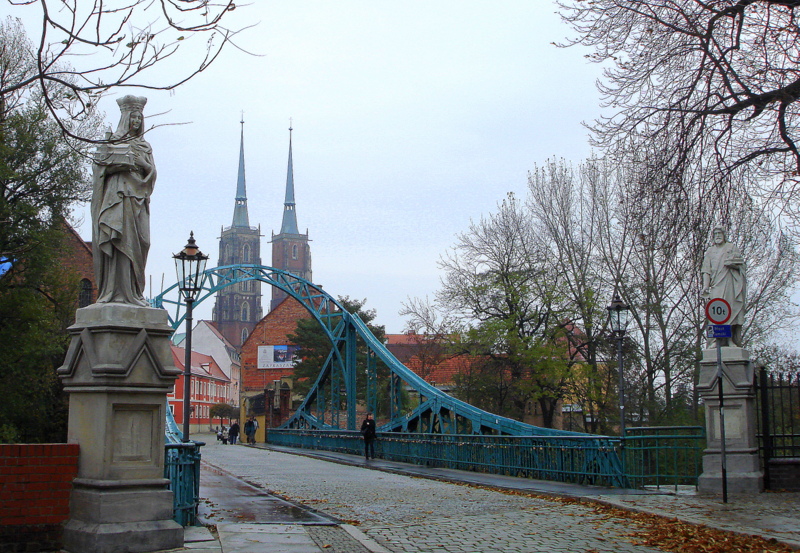
Few bridges are as closely connected with Wrocław’s image as Most Tumski. Standing between Ostrów Tumski and Wyspa Piaskowa, the bridge leads visitors towards the city’s oldest district, where the Cathedral of St John the Baptist and historic religious buildings create one of Poland’s most atmospheric urban landscapes.
The current steel bridge was opened in 1889, replacing earlier crossings that had served this area for centuries.
For many years, Most Tumski was known as the “Bridge of Lovers” because couples attached padlocks to its railings as a symbol of their relationships. Although the tradition became controversial because of the weight and maintenance issues caused by thousands of locks, the bridge remains one of the city’s favourite meeting points.
A walk across Most Tumski is one of the best ways to experience Wrocław’s connection with the river.
Most Grunwaldzki: An Icon of Engineering
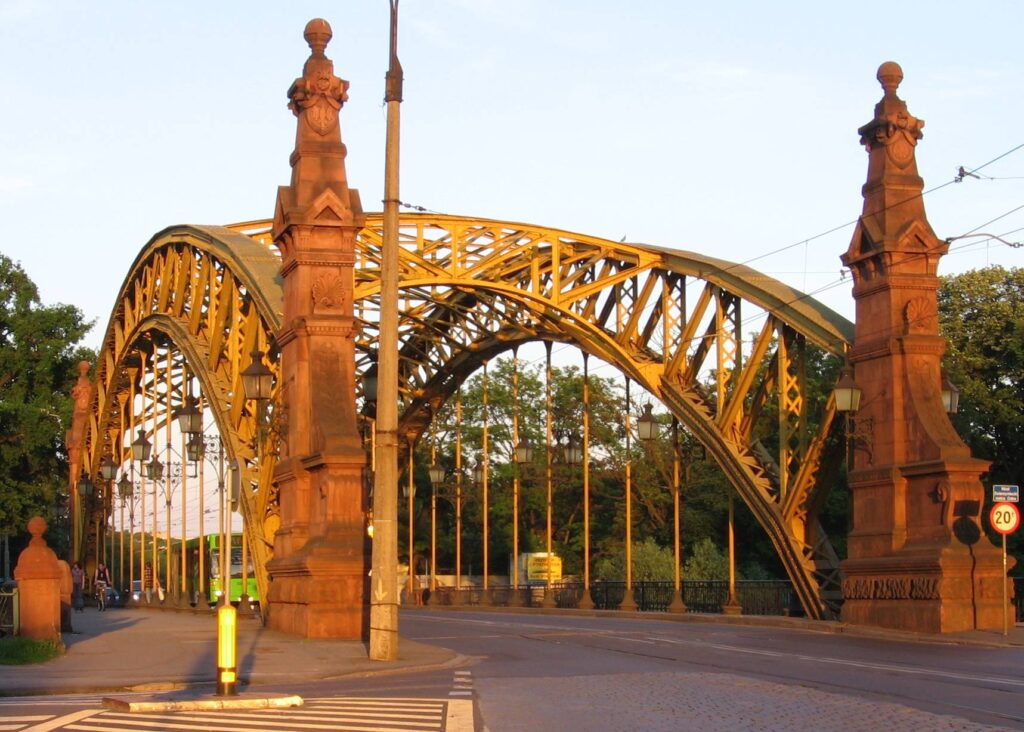
Rising above the Odra near the city centre, Most Grunwaldzki is one of Wrocław’s most recognisable landmarks.
Opened in 1910, the bridge was originally called Kaiserbrücke during the German period of the city’s history. Its suspension design represented a major engineering achievement at the time and made it one of Europe’s notable bridges.
Today, Most Grunwaldzki remains a vital transport connection, carrying trams, cars, cyclists and pedestrians between the city centre and eastern Wrocław.
Beyond its practical role, it is also one of the best places to appreciate the scale of the Odra and the changing skyline of the city.
Most Zwierzyniecki and the Route Towards Centennial Hall
Near Szczytnicki Park, the Zoo and Centennial Hall, Most Zwierzyniecki provides one of the most scenic river crossings in Wrocław.
The bridge has long served as a gateway towards the city’s major recreational areas. A walk in this part of Wrocław combines architecture, nature and culture, with the UNESCO-listed Centennial Hall complex, Japanese Garden and riverside paths all nearby.
The area demonstrates how bridges are not only transport infrastructure but also part of the experience of exploring the city.
Most Rędziński: A Modern Landmark on the Western Edge
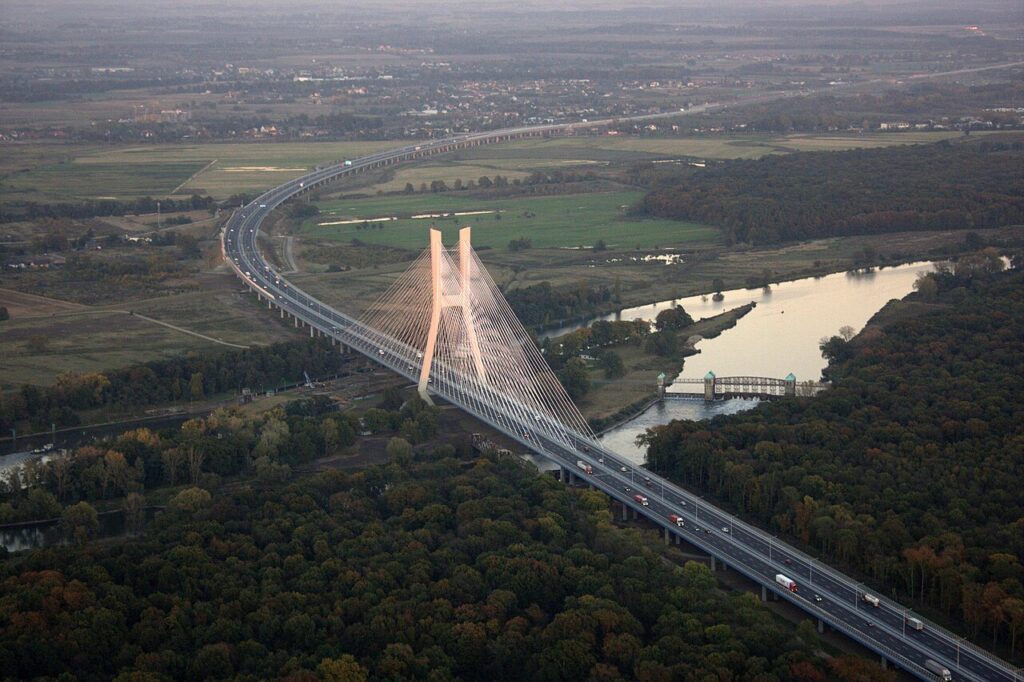
Wrocław’s newest generations of bridges show how the city continues to develop. Opened in 2011, Most Rędziński is one of Poland’s largest cable-stayed bridges.
The bridge forms part of the A8 motorway and helps traffic bypass the city centre. Its tall pylon and distinctive cables have created a modern landmark visible from across western Wrocław.
While historic bridges connect visitors with the city’s past, Most Rędziński represents Wrocław’s role as a growing regional centre with modern transport needs.
Bridges and Wrocław’s Relationship With Floods
Living beside the Odra has always brought opportunities and challenges. The river supported trade and development, but it also created risks.
After the devastating flood of 1903, Wrocław expanded its water management system, creating new channels, flood protection structures and navigation improvements. These projects changed the city’s relationship with the river and influenced the development of its bridges.
The 1997 Flood of the Millennium became another defining moment. The disaster affected large parts of Wrocław and highlighted the importance of maintaining the city’s river infrastructure.
Today, bridges remain a reminder that Wrocław has always had to work with, rather than against, its waterways.
Exploring Wrocław by Bridge
For visitors and residents, one of the best ways to discover the city is by following its bridges on foot.
A central walking route can include:
- Mosty Mieszczańskie
- Most Uniwersytecki
- Most Piaskowy
- Most Tumski
- Most Pokoju
- Most Grunwaldzki
- Most Zwierzyniecki
- Most Szczytnicki
The route combines historic districts, riverside paths, parks and some of Wrocław’s most photographed views.
The Bridges That Connect Wrocław’s Past and Present
Wrocław’s bridges reveal the city’s character. They show medieval beginnings, industrial ambition, modern engineering and the everyday movement of a city that continues to grow around its rivers.
For residents, they are familiar parts of daily life. For visitors, they provide a different perspective on Wrocław, one where history, architecture and nature meet above the water.
Find more things to explore in Wrocław here!