When we buy a piece of clothing, the price on the label tells us what it costs to purchase. It says much less about the resources used to make it.
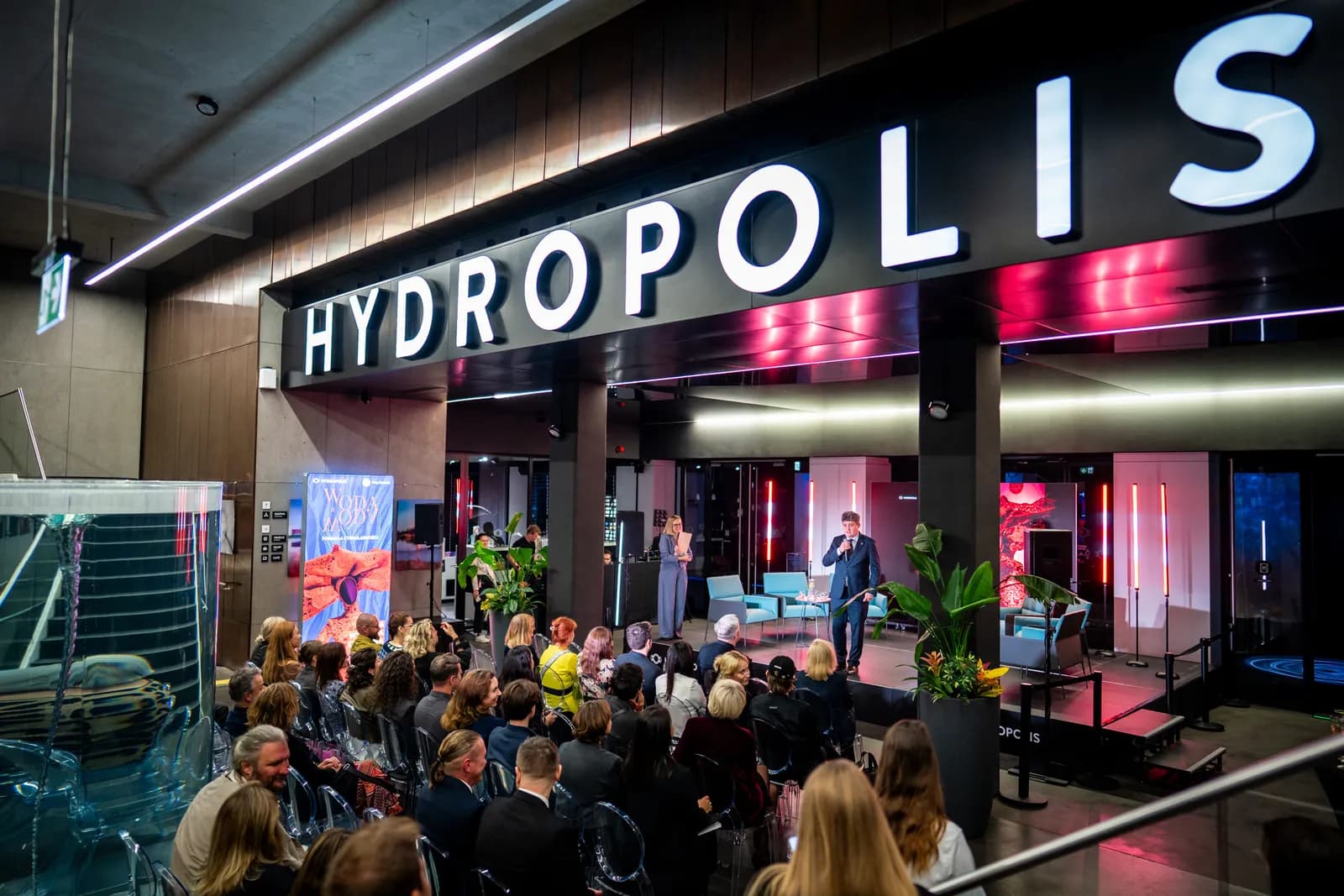
A new exhibition at Wrocław's Hydropolis is inviting visitors to look at fashion differently, through the lens of water.
Woda a moda, prepared by Fundacja Play Sustain, explores the relationship between clothing and one of the world's most important resources. Among the facts presented to visitors is the estimated 2,500 litres of water needed to produce a single cotton T-shirt.
The exhibition looks at what happens before clothes reach a shop, from growing cotton and producing fibres to dyeing and finishing fabrics. It also considers what happens after clothes are no longer wanted.
The hidden water footprint of fashion
The textile industry uses enormous quantities of water. According to the information accompanying the exhibition, around 93 billion cubic metres of water are used by the sector each year, while textile production accounts for around 20 per cent of industrial water pollution worldwide.
For Hydropolis, the subject fits naturally with its wider focus on water and environmental awareness.
“W Hydropolis od lat pokazujemy, że woda jest zasobem ograniczonym, od którego zależy funkcjonowanie ludzi, miast i całych ekosystemów. Wystawa „Woda a moda” zwraca uwagę na problem, którego wielu z nas nie dostrzega na co dzień. Kupując kolejne ubranie, rzadko zastanawiamy się, ile wody zużyto do jego wyprodukowania. Tymczasem nasze codzienne wybory mają realny wpływ na środowisko. Chcemy, by ta wystawa była impulsem do refleksji i inspiracją do bardziej świadomych decyzji” – says Przemysław Gałecki, Vice-President of MPWiK Wrocław, the water company responsible for Hydropolis.
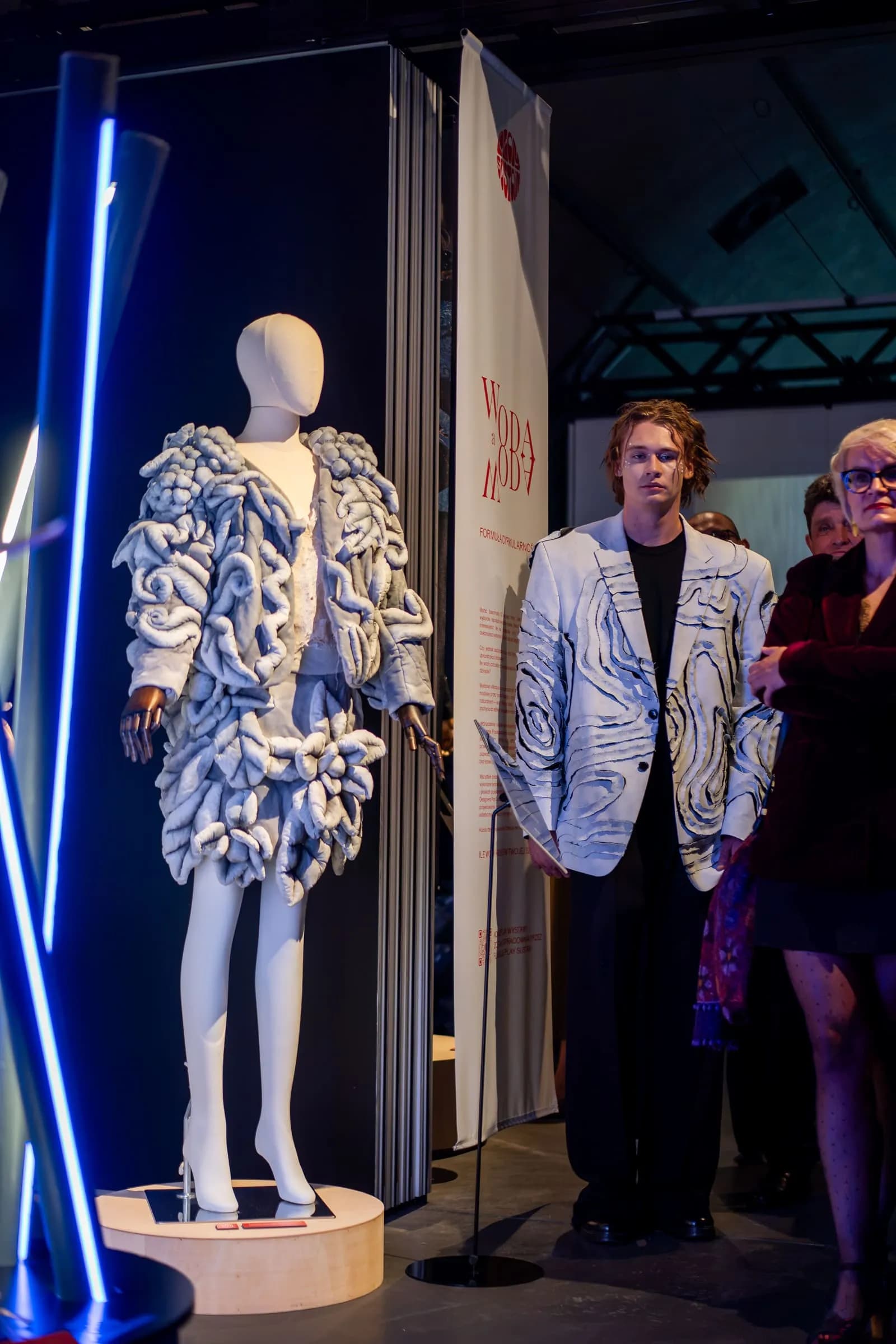
The exhibition features 13 mannequins with designs by fashion designers, alongside artistic installations and examples of circular-economy solutions. Among the designers represented are Gosia Baczyńska and Mariusz Przybylski.
Baczyńska says the exhibition is also an opportunity to consider the history of a garment, how it was made and the value of the work and resources behind it.
From discarded clothes to new designs
Rather than focusing only on the environmental cost of fashion, Woda a moda also presents examples of ways the industry can reduce its impact.
One example is the Glitch sculpture series by Tomasz Zjawiony, created from fabric offcuts and production remnants. Other exhibits demonstrate upcycling, including designs created from existing clothing rather than new materials.
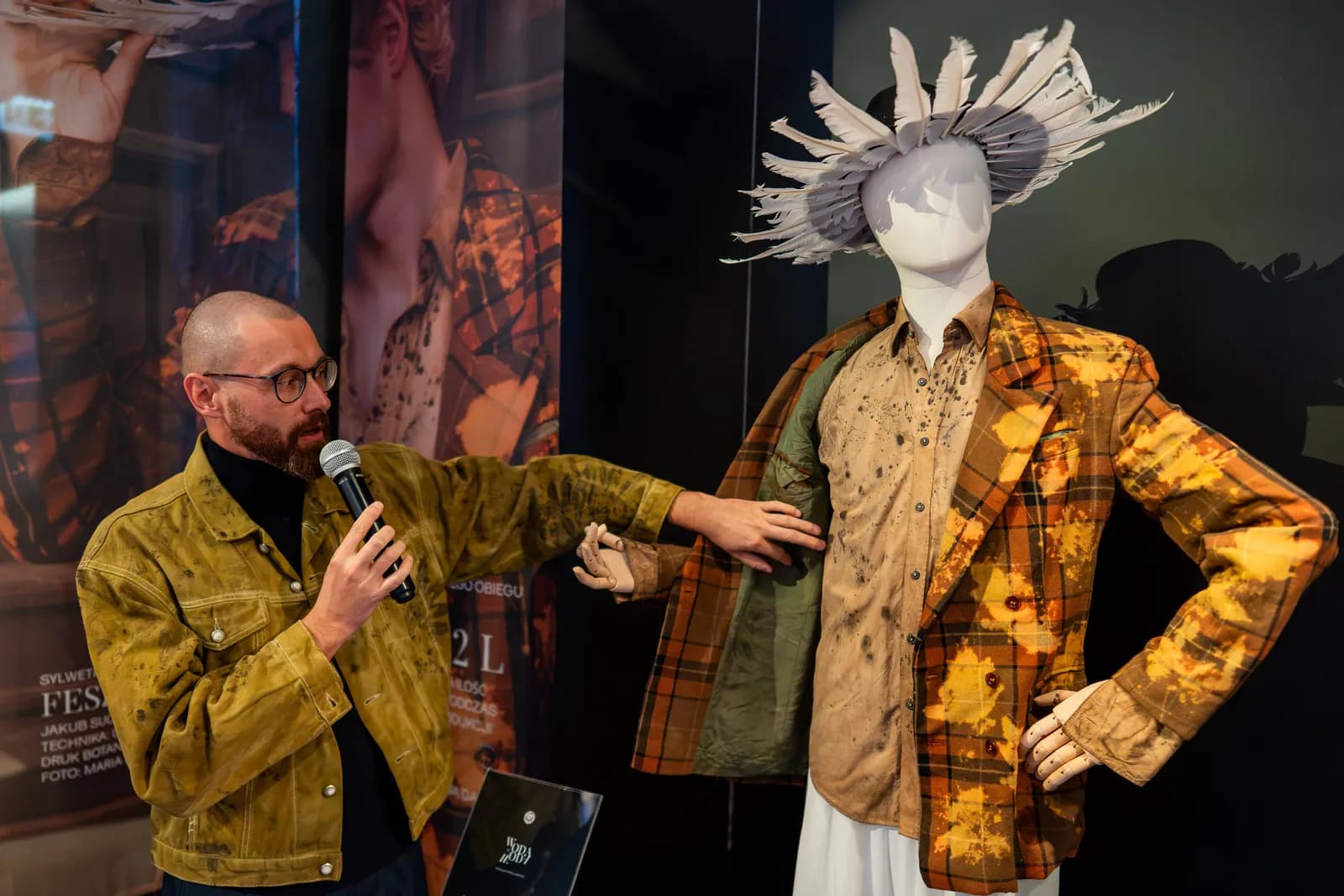
The Feszter collection by Jakub Suchara uses natural dyeing methods and botanical printing. According to the exhibition information, reusing clothing for the collection saved 117,432 litres of water.
Another example is a dress from Dominika Żyży's Timeless collection, created from 15 second-hand shirts. Its production is estimated to have saved around 40,500 litres of water.
The exhibition also looks towards digital design. Virtual collections created through the Designers Play Sustain competition demonstrate how digital prototyping can reduce the number of physical samples required during the design process, potentially reducing material use, water consumption and associated emissions.
From Atacama to Wrocław
One of the exhibition's most striking installations is Pustynia pod falą wody, created by designer Robert Kuta with digital creator Tomasz Gawroński.
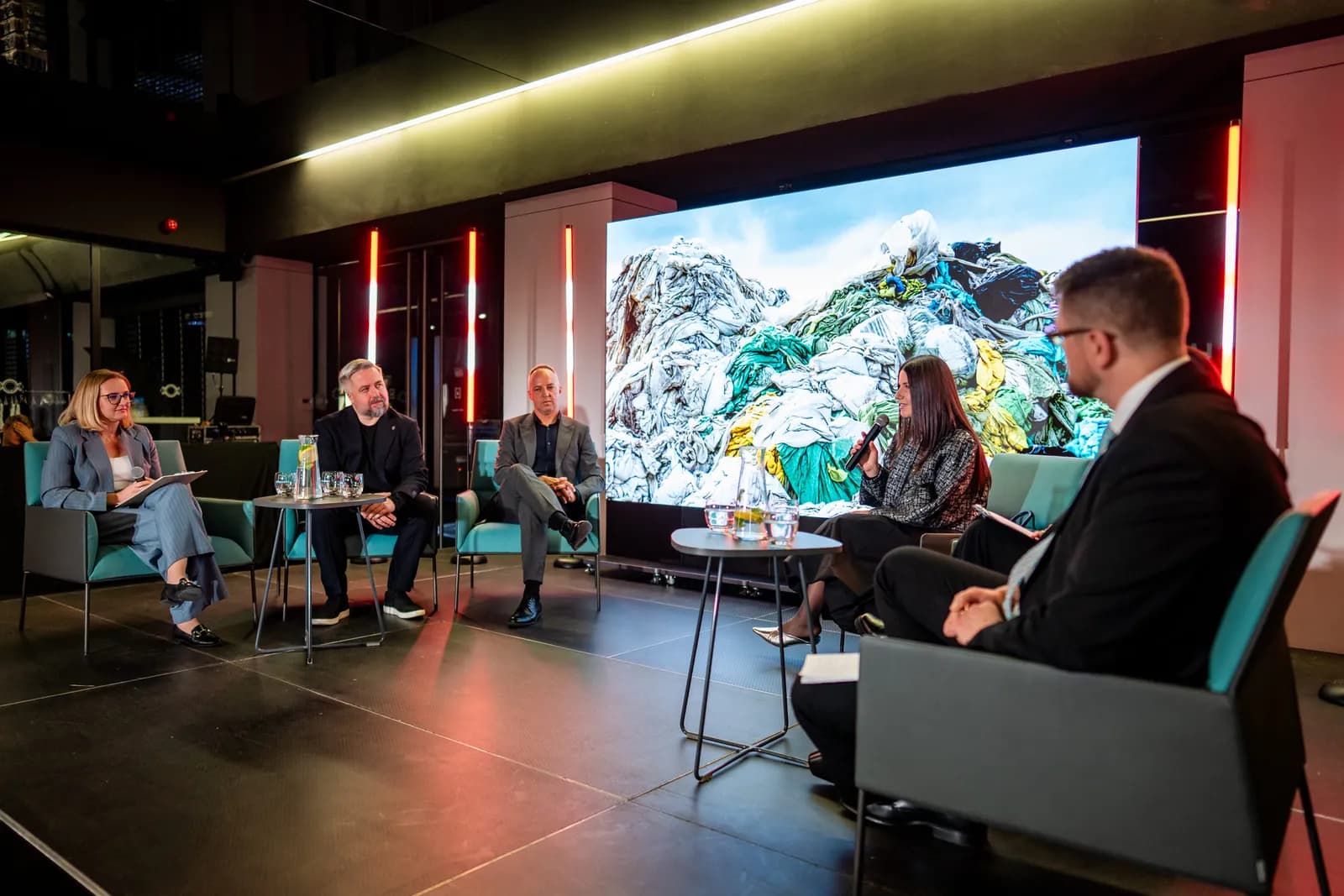
The installation references Chile's Atacama Desert and the large quantities of unwanted clothing that reach the region from Europe, the United States and Asia. The exhibition uses this distant landscape to consider what happens to clothing long after it has left our wardrobes.
The subject returns visitors to a much more familiar place: their own homes.
A water footprint calculator at the exhibition demonstrates how much water is effectively contained within everyday products. Visitors can discover, for example, that a pair of jeans can require as much as 8,000 litres of water to produce.
The exhibition therefore asks visitors to consider fashion not only as something we wear, but as part of a much larger chain of resources, production and consumption.
For a city where water is already at the centre of Hydropolis's educational mission, it is a fitting question. The exhibition does not ask visitors to stop enjoying fashion. Instead, it encourages a closer look at what sits behind the clothes we choose and what happens to them when we are finished with them.
Visitor Information
Exhibition: Woda a moda
Venue: Hydropolis, Wrocław
On display until: 30 May 2027
Access: The exhibition can be visited as part of a visit to Hydropolis's permanent exhibition.
Organiser and creator: Fundacja Play Sustain
Curator and Art Director: Sofia Klein