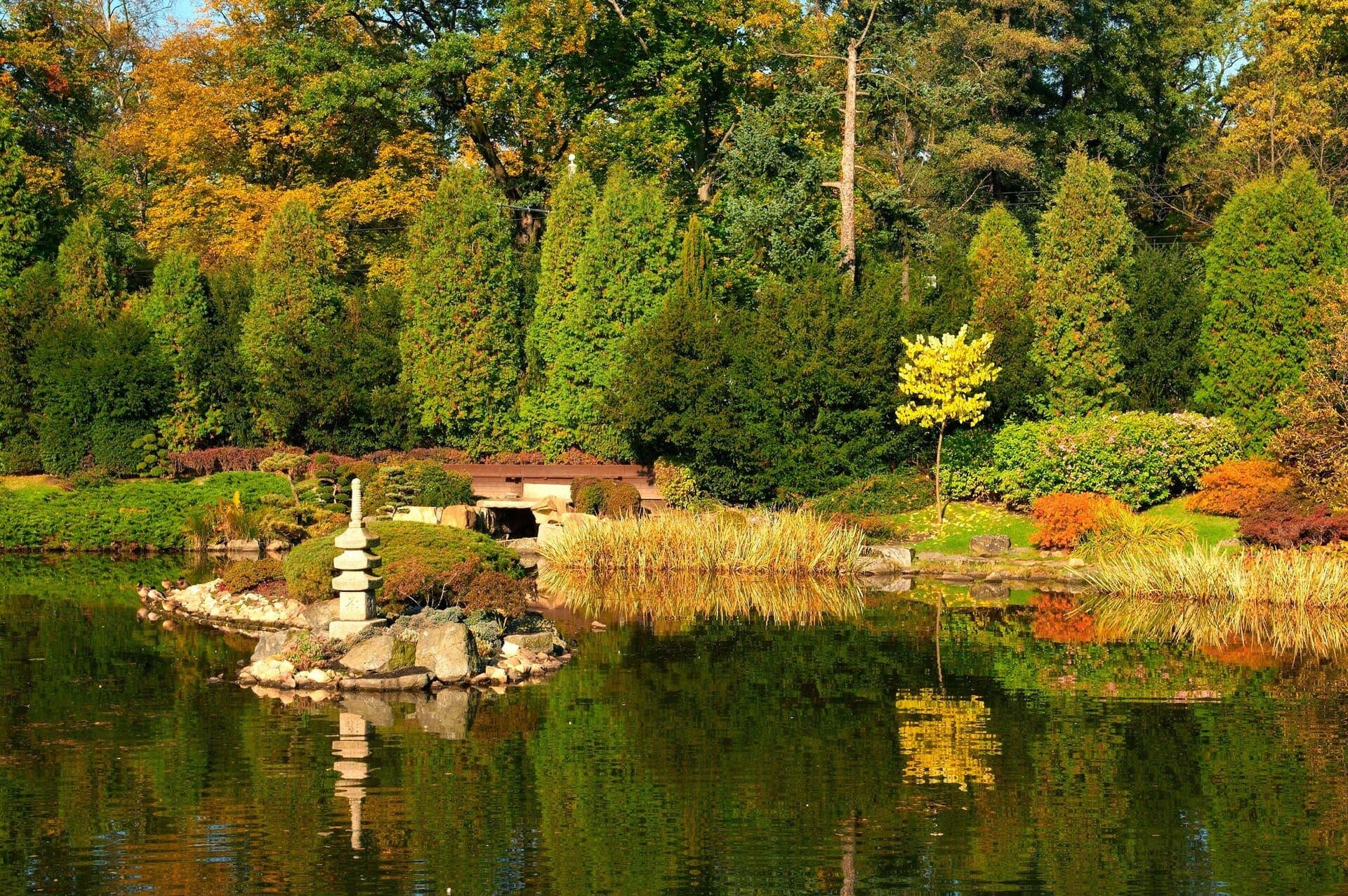
Hidden among the mature trees of Szczytnicki Park, the Japanese Garden (Ogród Japoński) offers a welcome escape from the pace of city life. Just a short walk from Centennial Hall, the Pergola and Wrocław Zoo, this beautifully landscaped garden is one of the city’s most treasured attractions and an essential stop for visitors exploring eastern Wrocław.
Throughout the warmer months, winding paths lead past tranquil ponds, elegant wooden bridges and carefully chosen planting inspired by traditional Japanese landscapes. Every season brings something different, from delicate cherry blossom in spring to fiery red maples in autumn, making the garden a favourite destination for photographers, nature lovers and anyone seeking a quieter side of the city.
Its peaceful atmosphere may feel timeless, but the garden has a remarkable story, shaped by international collaboration, historic exhibitions and one of the most devastating floods in modern Polish history.
A Lasting Legacy of the Centennial Exhibition
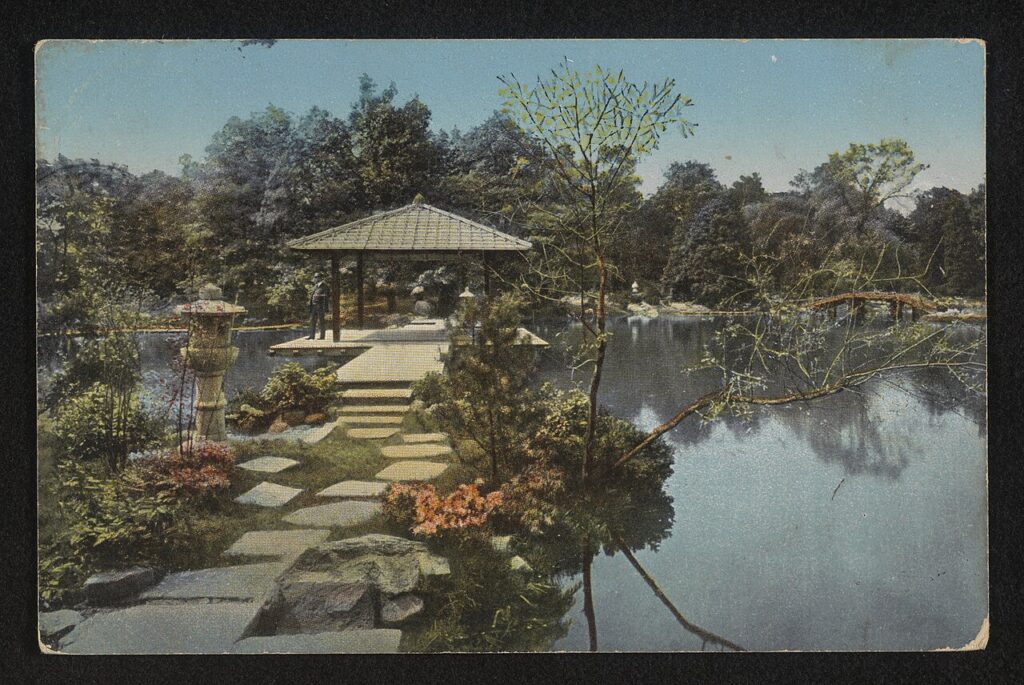
The Japanese Garden was created between 1909 and 1913 as part of preparations for the Centennial Exhibition, a major international event held in what was then the German city of Breslau.
Unlike many themed gardens of the era, this was designed with authenticity in mind. Count Fritz von Hochberg, fascinated by Japanese culture, invited Japanese gardener Mankichi Arai to help create a landscape that reflected traditional Japanese principles rather than a European interpretation of them.
When the exhibition ended, many temporary attractions disappeared. The garden, however, remained. Its central pond, mature trees and carefully planned layout survived, allowing future generations to enjoy one of the exhibition’s most enduring legacies.
Today, it remains one of the few historic Japanese gardens in Europe created with direct involvement from Japanese landscape specialists.
A Garden That Rose Again
The decades that followed were not always kind to the garden. Changing ownership, war and limited maintenance gradually eroded much of its original character.
A major restoration project began in 1995, bringing together Polish and Japanese experts determined to return the garden to its former beauty. Traditional planting schemes, architectural details and landscape techniques were carefully reintroduced, creating the peaceful setting visitors see today.
Only weeks after reopening, however, the catastrophic flood of 1997 swept across Wrocław.
The Japanese Garden was almost entirely submerged, destroying much of the newly restored landscape. Years of painstaking work followed before it finally reopened in 1999, making its recovery one of the city’s most inspiring conservation stories.
For many residents, the garden stands not only as a beautiful attraction but also as a reminder of Wrocław’s resilience.
Traditional Japanese Design in the Heart of Wrocław
Every corner of the garden has been designed to encourage a slower pace.
Rather than following the formal symmetry common in European parks, the pathways reveal the landscape gradually. Curving routes, carefully positioned rocks, flowing water and ornamental trees create changing views with every few steps.
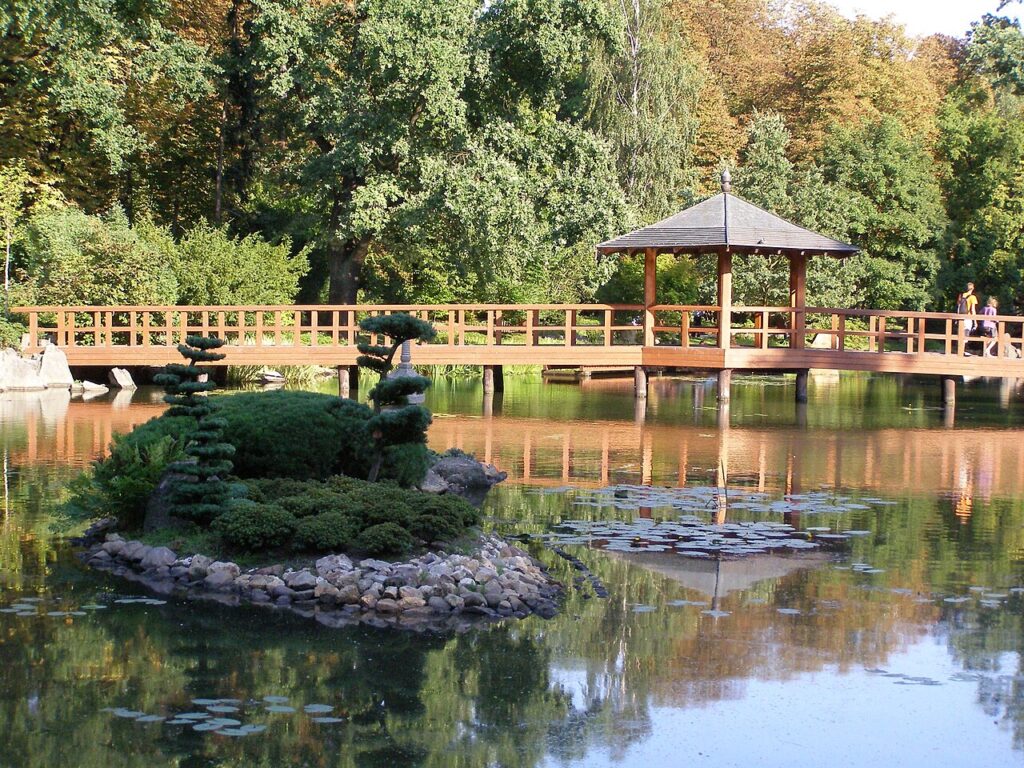
Traditional stone lanterns, timber bridges and reflective ponds all play their part in creating harmony between architecture and nature.
The result is a garden that rewards quiet exploration rather than hurried sightseeing.
Highlights to Look Out For
Whether it is your first visit or your tenth, there are several features that define the Japanese Garden experience.
Yumedono Bridge
The elegant wooden Yumedono Bridge stretches gracefully across the central pond and has become one of the most photographed landmarks in Wrocław. Its reflections in the water make it particularly striking during calm mornings and golden hour.
Colourful Koi Carp
The garden’s large pond is home to vibrant koi carp, which glide beneath the bridges throughout the season. Watching them has become one of the most popular moments for families and photographers alike.
A Remarkable Plant Collection
The Japanese Garden showcases an impressive collection of ornamental trees and shrubs, including Japanese maples, magnolias, azaleas, rhododendrons, ornamental cherries and ginkgo trees.
Various mature specimens date back to the original planting over a century ago, while many others were introduced during the extensive restoration carried out in partnership with Japanese horticultural specialists.
The Best Time to Visit the Japanese Garden
Every visit offers something different.
In spring, cherry blossoms, magnolias, and azaleas bring bursts of colour that attract visitors from across Lower Silesia.
Summer transforms the garden into a lush green oasis, with flowering water lilies and thriving koi ponds creating a peaceful atmosphere even on warmer days.
Autumn is equally spectacular, as Japanese maples turn brilliant shades of crimson, amber and gold, making it one of Wrocław’s finest locations for seasonal photography.
Because the garden is only open from spring until autumn, many residents make it an annual tradition to return and experience each season’s changing landscape.
Exploring the Surrounding Area
The Japanese Garden forms part of one of Wrocław’s most popular visitor districts.
Within just a few minutes’ walk, you can also discover:
- Centennial Hall, a UNESCO World Heritage Site
- The historic Pergola
- The Multimedia Fountain
- Wrocław Zoo
- The extensive walking routes of Szczytnicki Park
Together, these attractions make it easy to spend an entire day exploring one of the greenest parts of the city.
For visitors staying in the Old Town, the area is easily reached by tram, making it one of the most accessible day trips within Wrocław itself.
A Place That Reflects Wrocław’s International Character
Wrocław has long been shaped by different cultures, traditions and international influences, and the Japanese Garden is a perfect example of that heritage.
Created during an international exhibition, restored through Polish and Japanese cooperation and preserved for future generations, it continues to symbolise cultural exchange while offering one of the city’s most peaceful public spaces.
Its combination of history, landscape design and botanical beauty makes it unlike anywhere else in Lower Silesia.
Whether you are visiting Wrocław for a weekend or have lived here for years, the Japanese Garden remains one of those places that rewards returning time and again.
Discover more hidden gems in Wrocław here!