Walking through the paths of Szczytnicki Park, surrounded by old trees, gardens and some of Wrocław’s best-known attractions, it is easy to miss just how extraordinary the building rising ahead really is.
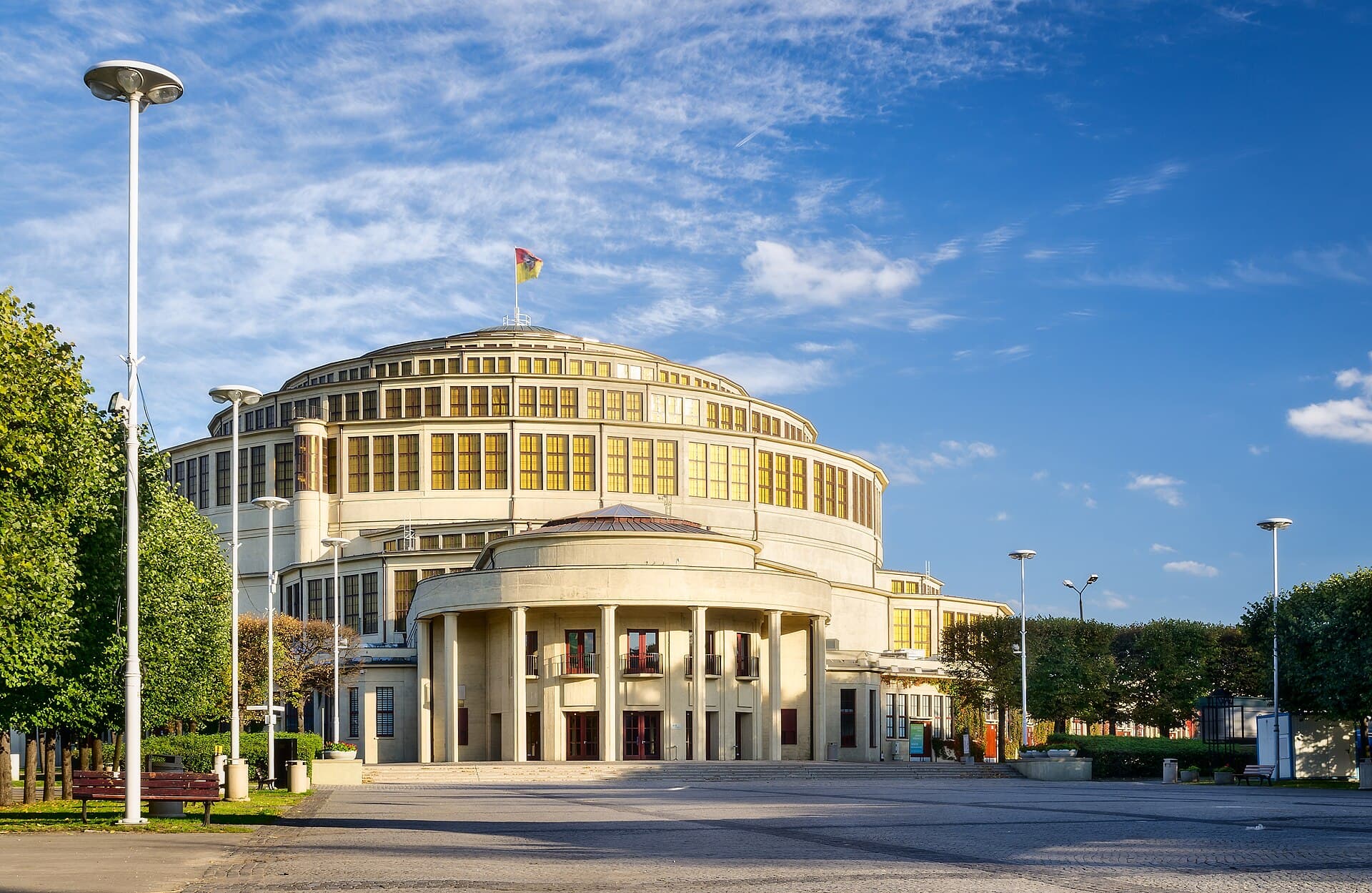
Hala Stulecia, with its enormous concrete dome and distinctive silhouette, has been part of Wrocław’s landscape for more than a century. Today, it hosts concerts, exhibitions, conferences and sporting events, but its story begins with a much more ambitious vision.
Opened in 1913, the hall was one of the most daring architectural projects in Europe. It challenged ideas about how public buildings should look, pushed reinforced concrete engineering to new limits and became a symbol of a city undergoing rapid change.
For modern visitors and residents, Hala Stulecia is one of the best examples of Wrocław’s layered history, where German, Polish, and European influences meet in one remarkable place.
A Giant Concrete Dome That Changed Architecture
When Hala Stulecia opened, its reinforced concrete dome was a sensation.
Designed by architect Max Berg, the structure had a span of around 65 metres, making it the largest reinforced concrete dome in the world at the time. It was a remarkable achievement in an era when concrete was still considered an experimental material for major architectural projects.
Rather than covering the structure with decorative stonework, Berg allowed the engineering to speak for itself. The exposed concrete, sweeping curves and enormous interior created a new architectural language.
Today, many experts consider Hala Stulecia one of the buildings that helped shape modern architecture.
The Wrocław Landmark Built For A Historic Exhibition
The story of Hala Stulecia is closely connected with the Centennial Exhibition of 1913.
At the time, Wrocław was known as Breslau and was part of the German Empire. The exhibition marked the 100th anniversary of the 1813 campaign against Napoleon and was designed to showcase cultural, scientific and industrial achievements.
The event transformed the area around today’s Szczytnicki Park into a major exhibition district.
Visitors could explore displays dedicated to:
- industry and technology
- agriculture
- architecture
- art
- regional development
Hala Stulecia was the centrepiece, created to demonstrate what modern engineering could achieve.
Max Berg’s Vision For A Modern Public Space
Max Berg was not interested in creating another traditional monument.
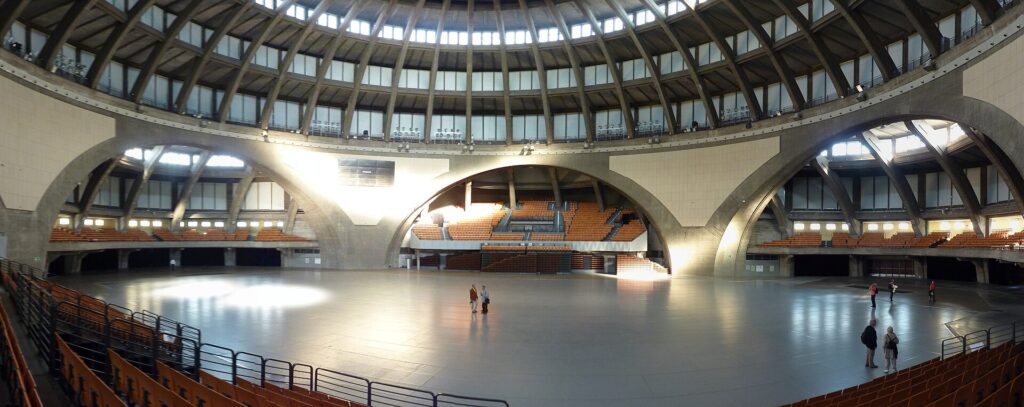
Instead, he imagined Hala Stulecia as a democratic public gathering space. The huge open hall was designed to bring large groups of people together for exhibitions, performances and civic events.
The building’s simplicity was deliberate. There were no grand historical decorations or elaborate façades. Instead, the focus was placed on structure, light, space and human interaction.
This approach was considered radical at the beginning of the 20th century.
A Lost Musical Treasure Inside The Hall
One of the forgotten stories of Hala Stulecia is the enormous organ that once filled its interior with music.
The instrument, created by Wilhelm Sauer, was among the largest in the world when installed for the hall’s opening in 1913. With around 15,000 pipes, it was designed to match the scale of the building itself.
Large concerts and official ceremonies used the organ to create an unforgettable atmosphere inside the vast dome.
The instrument was damaged during the Second World War and later dismantled. Some surviving parts were incorporated into other organs, including one at Wrocław Cathedral.
Although visitors today cannot hear the original instrument, its history remains an important part of the hall’s story.
A Building That Divided Opinion
When Hala Stulecia first appeared on the Wrocław landscape, not everyone appreciated its unusual appearance.
Some critics felt that the concrete structure was too industrial and lacked the decorative style expected from important public buildings.
The hall challenged traditional ideas about beauty. Instead of carved stone, columns and ornament, it presented engineering as architecture.
Over time, those same qualities became the reason it gained international recognition.
The Acoustic Challenge Of A Massive Interior
The scale that makes Hala Stulecia impressive also created technical difficulties.
The enormous volume beneath the dome affected sound quality, creating echoes that made performances challenging in the early years.
Like many historic buildings, the hall has evolved over time. Improvements have allowed it to continue hosting concerts, conferences and cultural events while preserving its unique character.
More Than A Building: The Hala Stulecia Complex
A visit to Hala Stulecia is really a visit to one of Wrocław’s most interesting cultural areas.
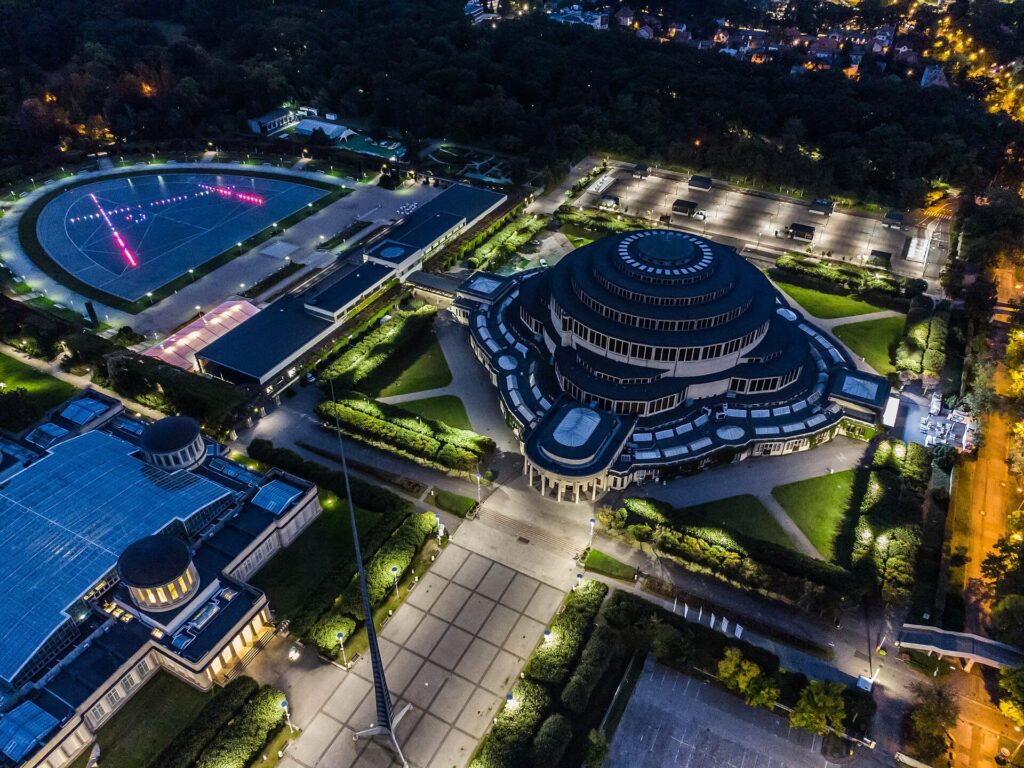
The building is surrounded by attractions that make this part of the city popular with residents and tourists alike:
- Szczytnicki Park
- Pergola
- Multimedia Fountain
- Japanese Garden
- Wrocław Zoo
- Pawilon Czterech Kopuł
The Four Domes Pavilion was also created for the 1913 exhibition and now houses a branch of the National Museum in Wrocław.
Together, these places create one of Wrocław’s best areas for combining culture, architecture and a relaxing walk.
From Breslau To Modern Wrocław
Few places show Wrocław’s changing identity as clearly as Hala Stulecia.
The building was created during the German period of the city’s history, survived the upheavals of the 20th century and became part of Polish Wrocław after the Second World War.
Rather than being treated only as a reminder of the past, it has become part of the city’s shared heritage.
This ability to preserve different historical layers is one of the defining features of Wrocław itself.
Why Hala Stulecia Still Matters To Wrocław Residents
For visitors, Hala Stulecia is an architectural landmark. For residents, it is also part of everyday city life.
People come here for:
- concerts and festivals
- exhibitions
- family walks around Pergola
- visits to nearby attractions
- sporting events
Its importance comes from the fact that it was never designed as a museum piece. It was created as a place for people to gather, and that role continues more than 100 years later.
Visiting Hala Stulecia In Wrocław
Hala Stulecia is located in the eastern part of Wrocław, close to some of the city’s most popular green and cultural attractions.
It is worth combining a visit with:
- a walk through Szczytnicki Park
- a visit to the Japanese Garden
- exploring Wrocław Zoo
- seeing the exhibitions at the Four Domes Pavilion
The area offers one of the most complete day-out experiences in Wrocław, combining history, architecture, and nature.
A Landmark That Still Tells Wrocław’s Story
Hala Stulecia is one of those places where the building itself tells the story.
Its concrete dome represents technological ambition, its surroundings reflect changing ideas about public space, and its history mirrors Wrocław’s own transformation over the past century.
From a controversial experiment in 1913 to a UNESCO-listed landmark and much-loved city venue, Hala Stulecia remains one of the most fascinating places to explore in Wrocław.
Click here to discover more hidden gems in Wrocław!