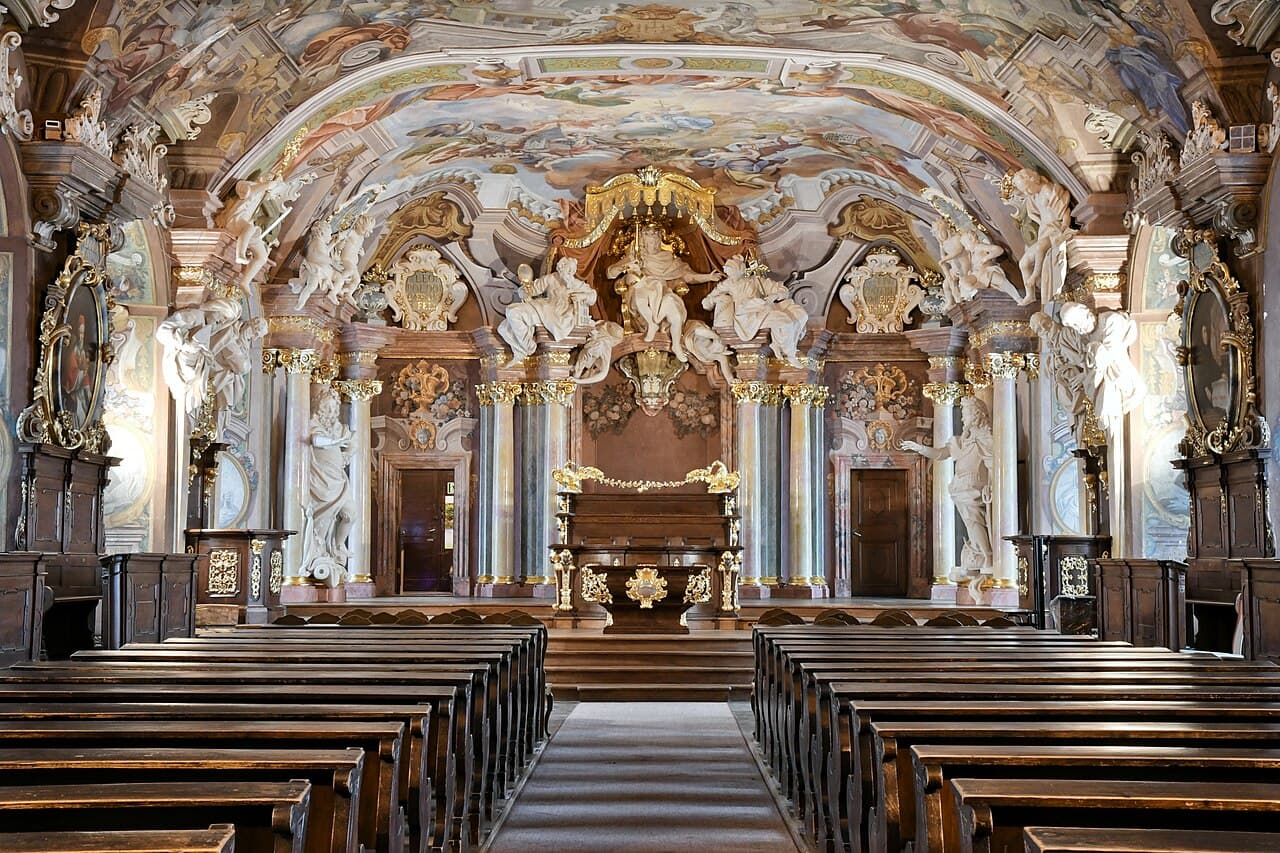
Discover Aula Leopoldina at the University of Wrocław Museum. Explore one of Poland’s finest Baroque interiors, its fascinating history, architecture and why it remains one of Wrocław’s must-visit attractions.
There are few places in Wrocław where history, art and academic tradition come together as beautifully as they do in Aula Leopoldina. Hidden behind the impressive Baroque façade of the University of Wrocław’s historic main building, this extraordinary ceremonial hall has welcomed generations of scholars, distinguished guests and visitors for almost 300 years.
Many people strolling along the Odra River or exploring the nearby Market Square may admire the university’s striking exterior without realising that one of Poland’s most spectacular interiors lies just beyond its doors. Once inside, visitors are greeted by soaring frescoes, gleaming gilded decoration and a remarkable sense of theatre that has changed little since the eighteenth century.
Today, Aula Leopoldina forms part of the University of Wrocław Museum and remains one of the city’s most rewarding cultural attractions. Whether you are discovering Wrocław for the first time or looking to explore beyond the city’s best-known landmarks, this remarkable hall offers a memorable glimpse into the city’s rich academic and artistic heritage.
A landmark in the heart of historic Wrocław
Standing proudly on Plac Uniwersytecki, the University of Wrocław occupies one of the most recognisable positions in the city centre. The Baroque complex overlooks the River Odra and sits within easy walking distance of Rynek, Ostrów Tumski and many of Wrocław’s other historic attractions.
This central location makes Aula Leopoldina an ideal addition to any day spent exploring the Old Town. It is a place where visitors can step away from bustling streets and cafés to experience one of the finest surviving examples of Baroque craftsmanship in Central Europe.
For residents, the university has long been one of Wrocław’s defining institutions. For international visitors, it provides an opportunity to discover how the city’s layered history has shaped one of Poland’s leading centres of higher education.
Created to celebrate learning and prestige
The story of Aula Leopoldina begins with the establishment of the Jesuit Academy Leopoldina in 1702 by Emperor Leopold I. As the university expanded, plans were made for an impressive new building worthy of its growing reputation.
Construction of the ceremonial hall took place between 1728 and 1732. Named after the emperor himself, Aula Leopoldina was designed to demonstrate the importance of scholarship while reflecting the prestige of the institution it served.
Unlike many university halls built purely for practical purposes, this was conceived as a statement of ambition. Every painted ceiling, sculpted figure and gilded ornament was carefully planned to inspire students and honour knowledge.
Nearly three centuries later, that sense of occasion remains immediately apparent.
A masterpiece of Baroque design
The moment visitors enter Aula Leopoldina, their attention is naturally drawn upwards.
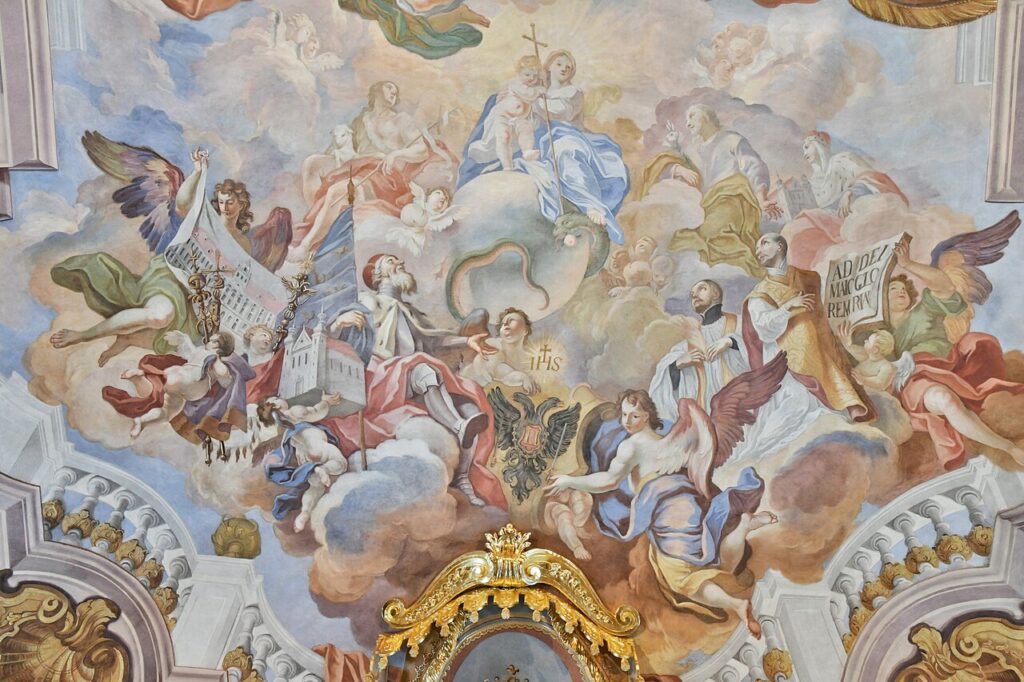
Magnificent illusionistic ceiling frescoes appear to dissolve the architecture into open skies, while richly detailed stucco work frames scenes celebrating faith, wisdom and education. White sculptures stand proudly against warm faux marble walls, with shimmering gold accents adding depth and elegance throughout the room.
Rather than relying on a single artistic feature, the hall succeeds because every element works together. Architecture, sculpture, painting and decorative craftsmanship blend seamlessly to create one of Europe’s finest examples of the Baroque ideal known as the “unity of the arts”.
It is this remarkable harmony that continues to captivate visitors today.
The artists behind the vision
Creating Aula Leopoldina required the talents of several leading artists and craftsmen of the period.
Architect Christophorus Tausch developed the overall design, drawing inspiration from the theatrical style popularised by the influential Jesuit artist Andrea Pozzo.
Johann Christoph Handke produced the spectacular ceiling and wall frescoes, while Franz Joseph Mangoldt created many of the sculptural elements that give the hall its striking three-dimensional appearance. Intricate stucco decoration by Ignazio Provisore completed the richly layered interior.
Together, their work transformed a ceremonial university hall into one of Wrocław’s greatest artistic achievements.
More than a museum
Although thousands of visitors admire Aula Leopoldina each year, it has never lost its original purpose.
The hall continues to host important university ceremonies, including matriculations, honorary doctorate presentations and official celebrations. Concerts and cultural events also take place here throughout the year, allowing audiences to experience both the hall’s exceptional acoustics and its remarkable surroundings.
This living connection between past and present gives Aula Leopoldina a distinctive atmosphere. It is not simply a preserved historic interior but an active part of university life, just as it was when the first students gathered here in the eighteenth century.
Explore the University of Wrocław Museum
A visit to Aula Leopoldina is included as part of the University of Wrocław Museum, making it easy to spend several hours discovering the institution’s fascinating history.
The museum’s permanent exhibitions feature historic academic regalia, ceremonial sceptres, manuscripts, scientific instruments and archival collections that illustrate the university’s development through changing political and cultural periods.
Many visitors also choose to climb the nearby Mathematical Tower. From its viewing platform, sweeping panoramic views stretch across Wrocław’s colourful rooftops, church towers and bridges, offering one of the city’s most photogenic perspectives.
The beautifully restored Oratorium Marianum provides another highlight, showcasing the elegance of Baroque music and architecture within the same historic complex.
Together, these attractions make the museum one of Wrocław’s most complete cultural experiences.
Carefully preserved for future generations
Like many of Wrocław’s historic buildings, Aula Leopoldina has witnessed periods of war, political change and restoration.
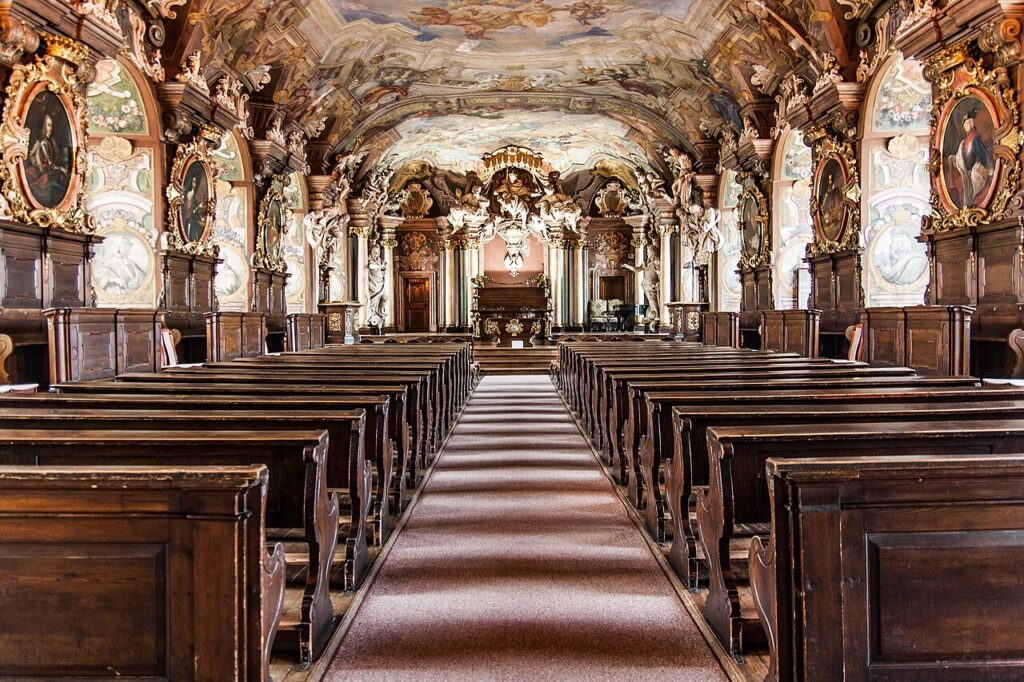
Extensive conservation work carried out between 2015 and 2018 helped preserve its intricate decorative features following years of careful research and planning. The beautifully restored hall officially reopened to visitors in 2022, ensuring that future generations can continue to appreciate one of Poland’s most remarkable Baroque interiors.
The reopening also celebrated the display of the Golden Bull, the founding document issued by Emperor Leopold I in 1702 that formally established the original Leopoldine Academy.
These conservation efforts highlight Wrocław’s ongoing commitment to protecting its rich cultural heritage while keeping historic spaces accessible to the public.
Why Aula Leopoldina deserves a place on your Wrocław itinerary
Wrocław is often celebrated for its colourful Market Square, picturesque bridges and famous dwarfs, yet some of its greatest treasures are found behind historic façades.
Aula Leopoldina is one of those places.
It offers visitors the chance to experience world-class Baroque art while discovering the story of a university that has shaped the city’s intellectual and cultural life for more than three centuries. It also reflects Wrocław’s unique identity, where Austrian, Czech, German and Polish influences have combined to create one of Central Europe’s most fascinating historic cities.
Whether you are passionate about architecture, interested in European history or simply looking for somewhere beyond the usual tourist trail, Aula Leopoldina rewards every visit with beauty, craftsmanship and a deeper understanding of Wrocław itself.
It is not only one of the city’s finest interiors but one of the cultural experiences that truly defines the character of the Lower Silesian capital.
More fascinating Wrocław history here!