Human rights are often discussed in the language of laws, institutions and international agreements. Yet for people living in a city, they can be much more immediate. They are present when someone feels safe waiting for a bus after dark, can understand an official letter or finds that a public space has been designed with their needs in mind.
These everyday experiences are at the centre of the Congress “Human Rights Cities – From Idea to Practice”, taking place in Wrocław on 17 and 18 November 2026. The event brings together representatives of local government, civil society organisations, experts and practitioners to consider how human rights can become part of the everyday work of municipal institutions.
A city can be more than a place to live
One of the Congress's guests of honour is Ales Bialiatski, the Belarusian Nobel Peace Prize laureate, director of the Viasna Human Rights Center and a long-time political prisoner.
His experience gives the discussion a personal perspective. Having been deported from Belarus, he speaks about the importance of how people are received when they arrive in an unfamiliar city.
“In December last year I was deported from Belarus. I know what it means to arrive in a foreign city and depend on how you will be received there. A city can become a refuge for human rights – a place where they can still be experienced in practice, not just read about on paper” – says Ales Bialiatski.
His contribution reflects one of the central questions behind the Congress: what responsibilities do cities have towards the people who live in them, including those who may be particularly vulnerable or in need of support?
The programme looks at several areas where municipal decisions have a direct impact on residents. These include accessibility, public participation, equal treatment, working conditions, and responses to prejudice-motivated violence and hate speech.
Turning principles into municipal practice
The discussions bring together people working across different parts of public life. Journalist Agnieszka Lichnerowicz will lead the opening discussion on human rights in the work of municipal institutions.
The involvement of residents in local decision-making will be explored by Kuba Wygnański of the Stocznia Foundation and Artur Celiński, editor-in-chief of Architektura-murator.
Urban space is another important part of the programme. Architect Magdalena Milert, known as Pieing, will discuss how cities can become more accessible and safe. Kacper Pobłocki of the University of Warsaw will consider whether cities that describe themselves as human rights cities are designed primarily with the middle class in mind.
Other sessions will examine the implementation of municipal equality strategies, the development of friendly workplaces and ways of responding to violence motivated by prejudice. Participants include representatives of local governments, the Share the Care Foundation, the Nowa Wspólnota Foundation and the Nomada Association.
Together, these subjects highlight how human rights are connected to decisions that may otherwise appear to belong to separate areas of city management. The design of a street, the standards of a workplace and the way a resident is treated by a municipal office can all influence whether people feel included and respected.
From discussion to practical changes
The Congress also includes a practical programme. On the second day, participants can take part in four workshops addressing different aspects of local government and public life.
The sessions will cover designing spaces that take different needs into account, standards of resident service based on empathy and respect, communication about human rights, and the use of social data in municipal policy.
For Barbara Lisiewicz, director of the Department of Social Diversity at Wrocław City Hall, the connection between these subjects is essential.
“We bring together the conversation about space, work, resident service and countering violence, because people experience the city in all of these areas. The value of the Congress will show when the knowledge gained is applied in an understandable letter, attentive service or better-designed space” – she emphasises.
That idea gives the Congress its practical purpose. A city's approach to human rights is not measured only by the strategies it adopts or the discussions it hosts. It is also reflected in the everyday experiences of its residents, and in whether municipal decisions make public life more accessible, fair and respectful.
VISITOR INFORMATION
Congress “Human Rights Cities – From Idea to Practice”
Dates: 17–18 November 2026
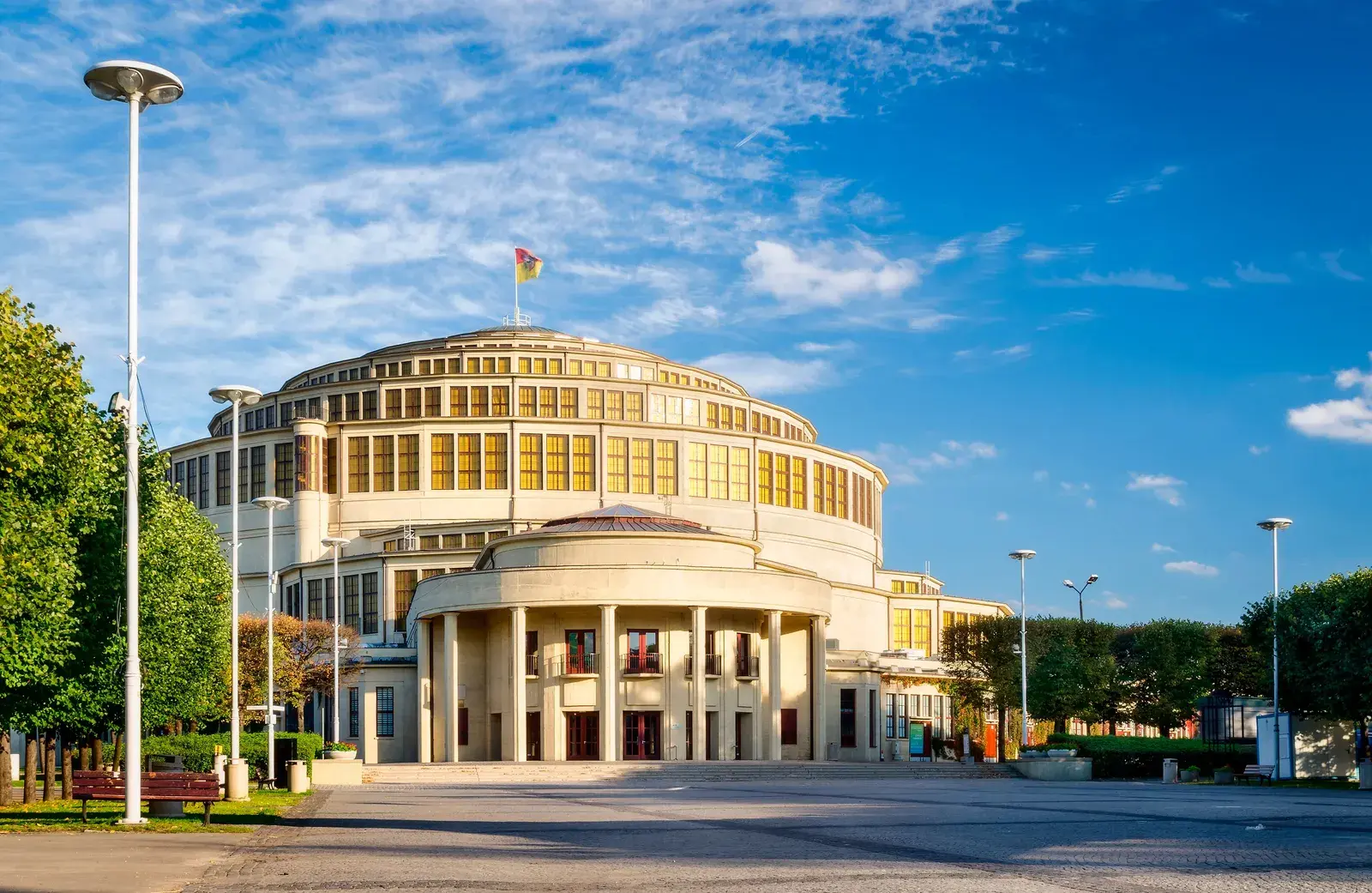
Venue: Wrocław Congress Center, Hala Stulecia (Centennial Hall), ul. Wystawowa 1, Wrocław
Admission: Free
Registration: Required due to limited places.